BookNotes
Building an app for capturing, connecting, and compounding knowledge while you read.
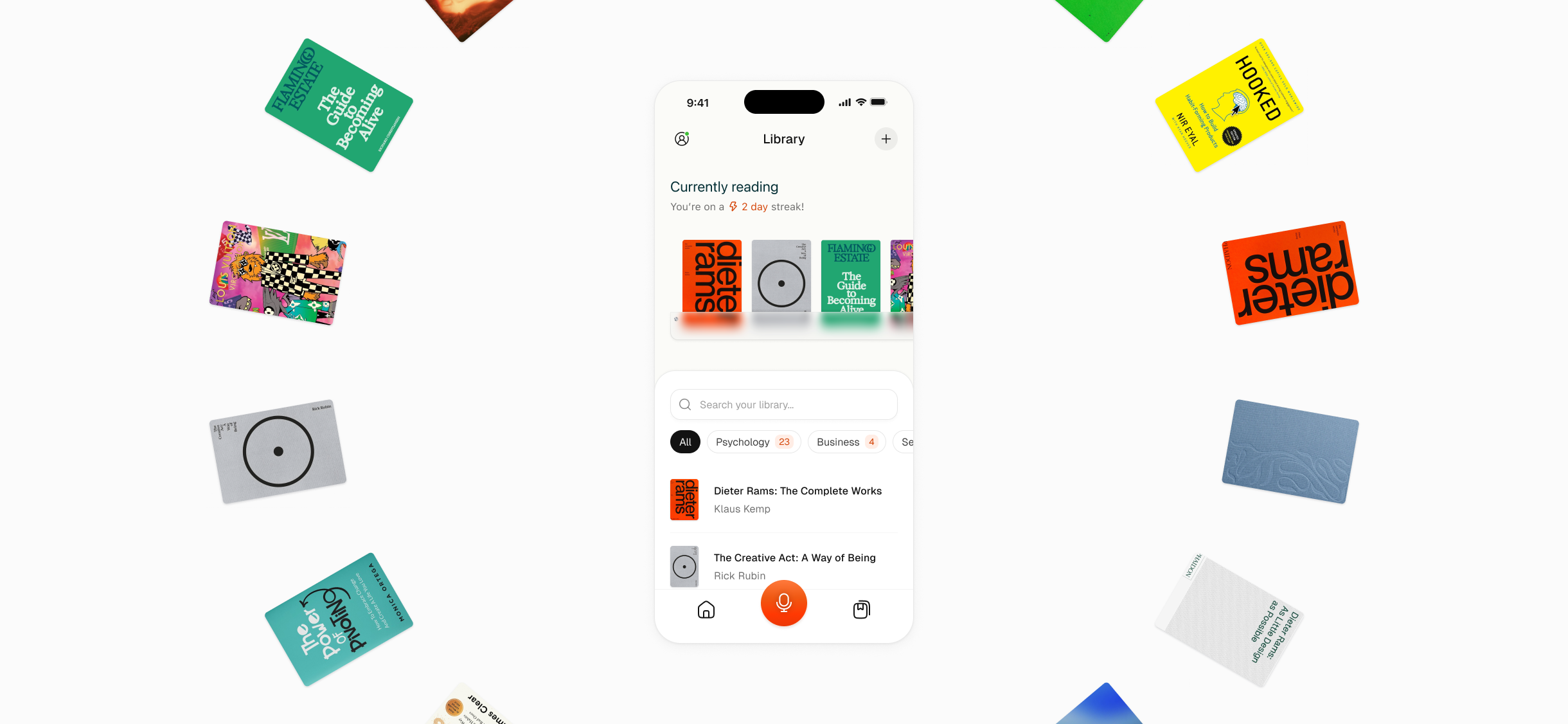
This project stemmed from a personal frustration as my reading notes were scattered across different places: notes on my phone or iPad, screenshots and even physical notes. I’d capture ideas in the moment, but when I returned to them later, the context was gone. Most were either forgotten or never acted on. The problem wasn’t always the capturing of ideas, it was retaining and reconnecting them so that I could ultimately learn from them.
So, I built BookNotes – a mobile app (available on the App Store here) designed to make capturing insights effortless, and more importantly, make them useful over time.
Problem shift
Reframing the problem
Some of my initial thinking focused on “making note-taking easier”, but that quickly proved insufficient and there are 101 apps that do that very same thing. When I dug deeper & spoke with friends who’re big readers, the real issue wasn’t friction alone, it was that our notes lacked structure, weren’t revisited, and didn’t compound into anything meaningful.
This led to a shift in framing: “How can I reduce the effort of capturing ideas to near-zero, while increasing their long-term value?” This then reframed the product from a simple notes tool into more of a thinking system as a whole.
User behaviour
Designing for behaviour, not features
A key early insight was that capture often happens in imperfect conditions – mid-reading, commuting, and in passing moments.
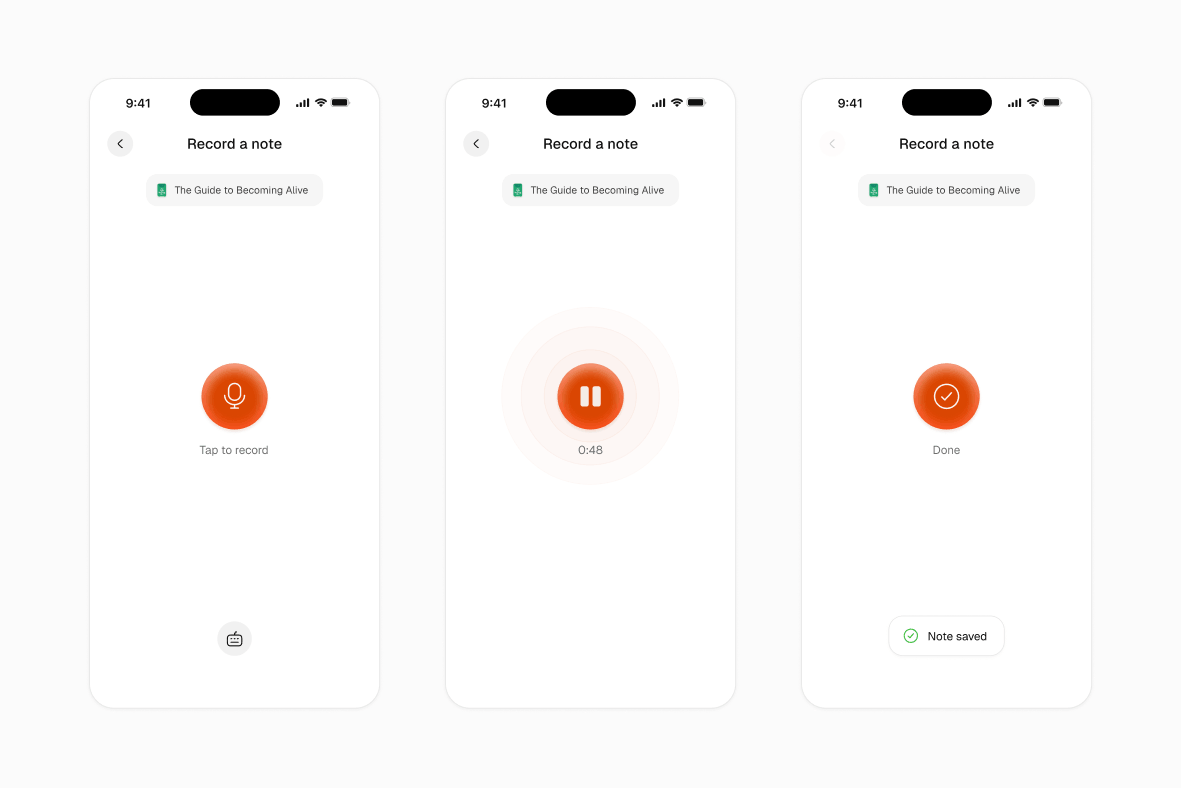
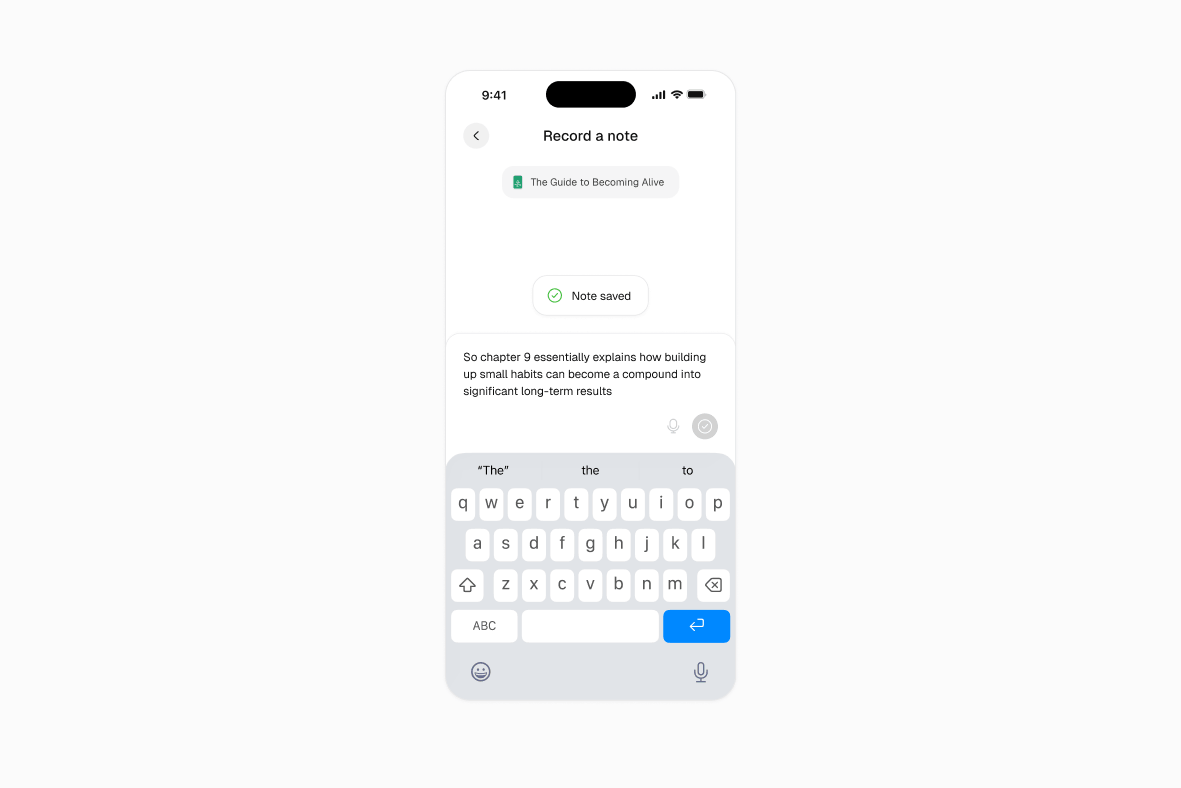
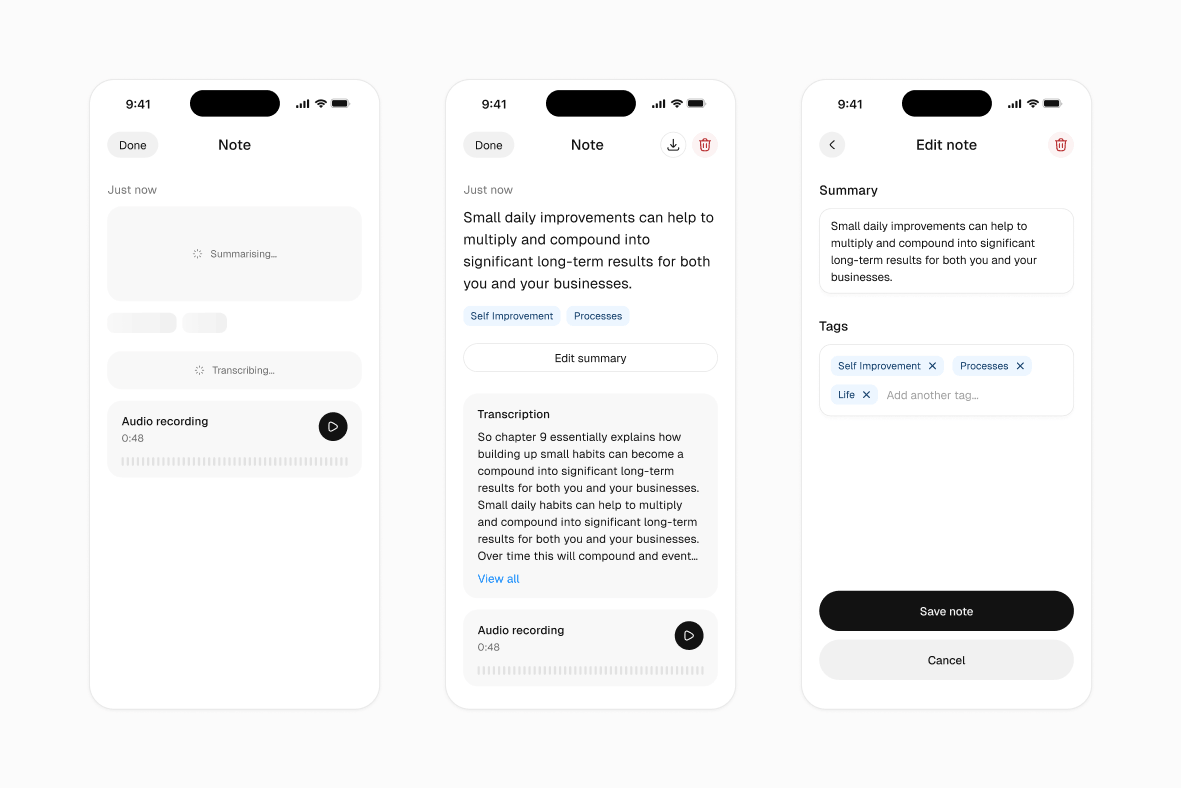
Typing, structuring, and organising at that point creates friction. The product was designed around a simple principle: capture should be instant, and structure should come later. This led to a voice-first interaction model, supported by optional text input when needed. Rather than forcing users into predefined formats, notes are captured as raw input and structured downstream.
Invisible structure
Creating structure without asking for it
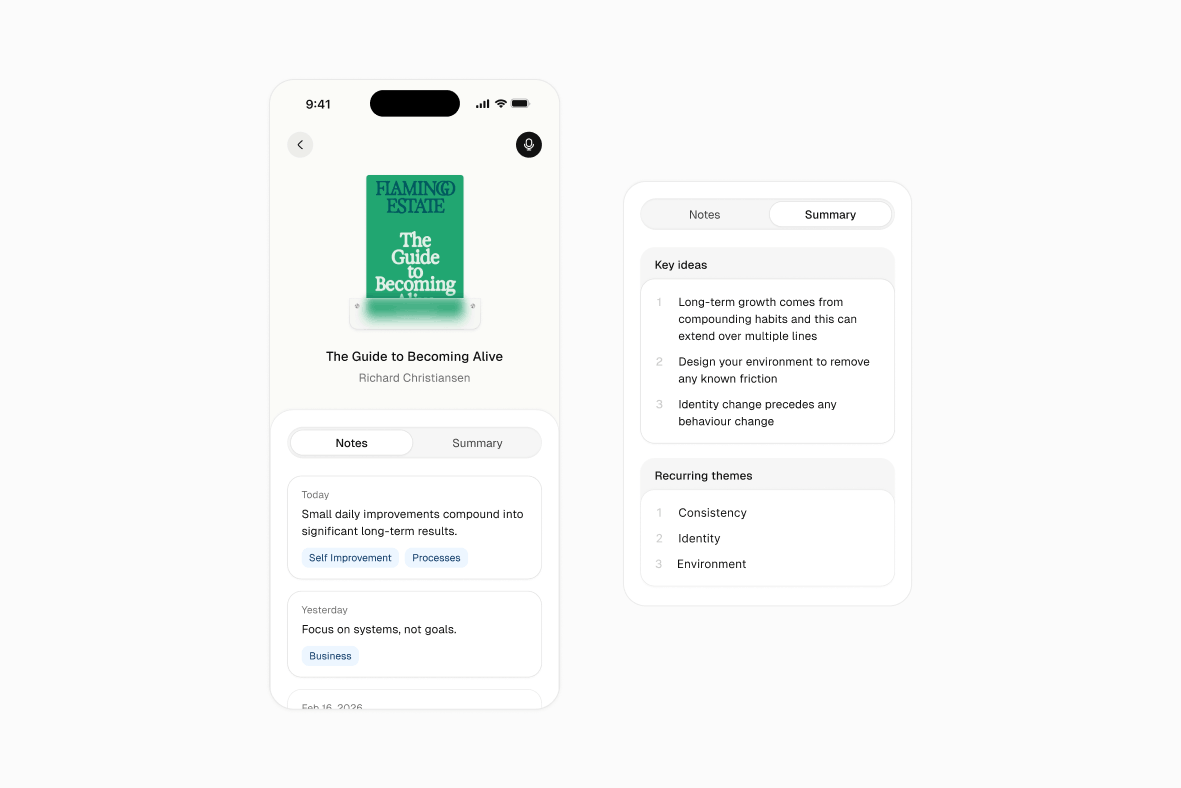
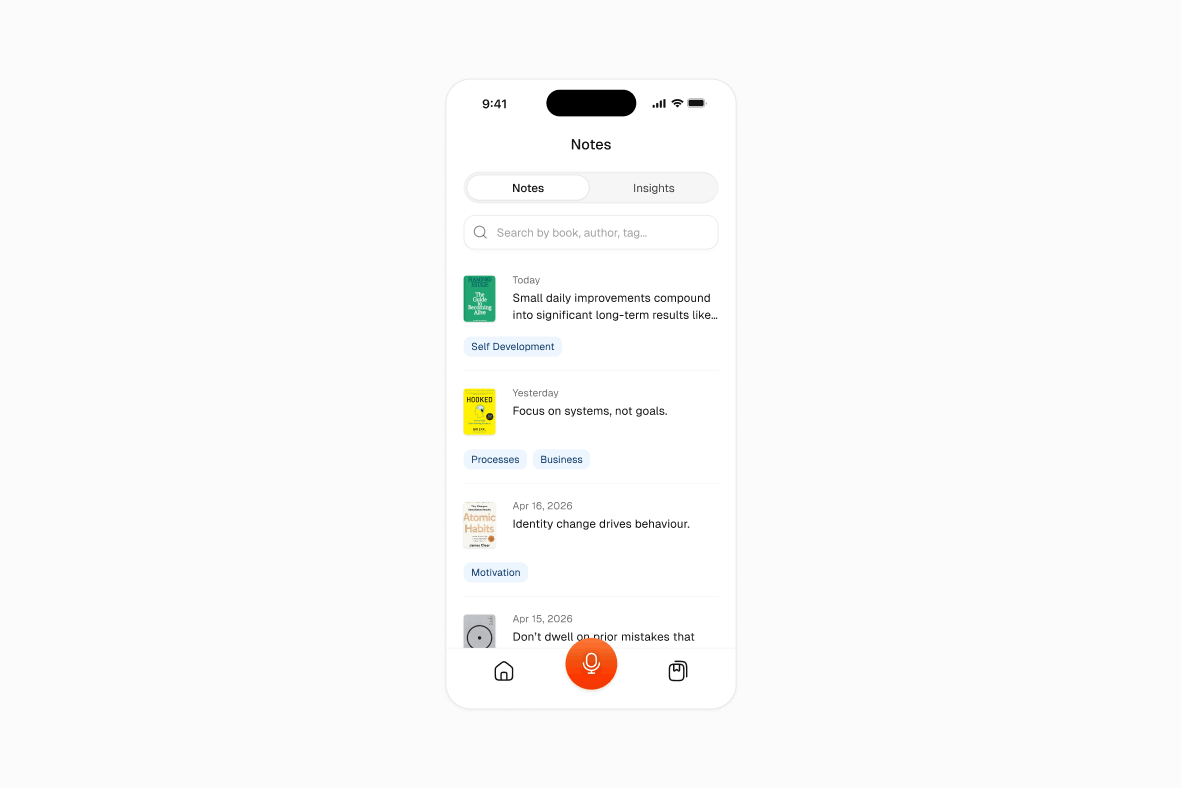
Instead of requiring users to organise their thoughts, the system does it for them. Each note moves through a pipeline: transcription → summarisation → tagging → thematic extraction. At the book level, this compounds into ‘key ideas’ and ‘recurring themes’. A key decision here was to delay structure, not eliminate it. Users shouldn’t have to think about organisation at the moment of capture; their full focus should be on capturing the essence of what they’ve just read.
Connecting the dots
From storage to synthesis
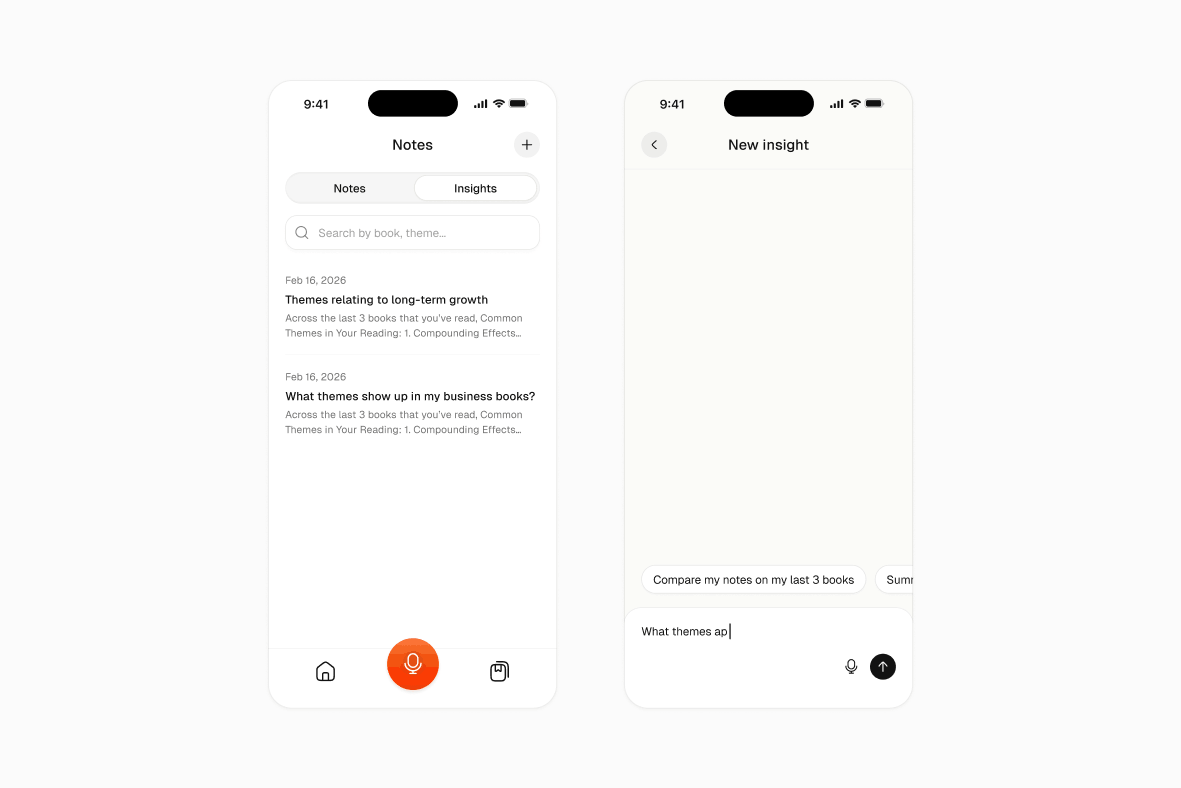
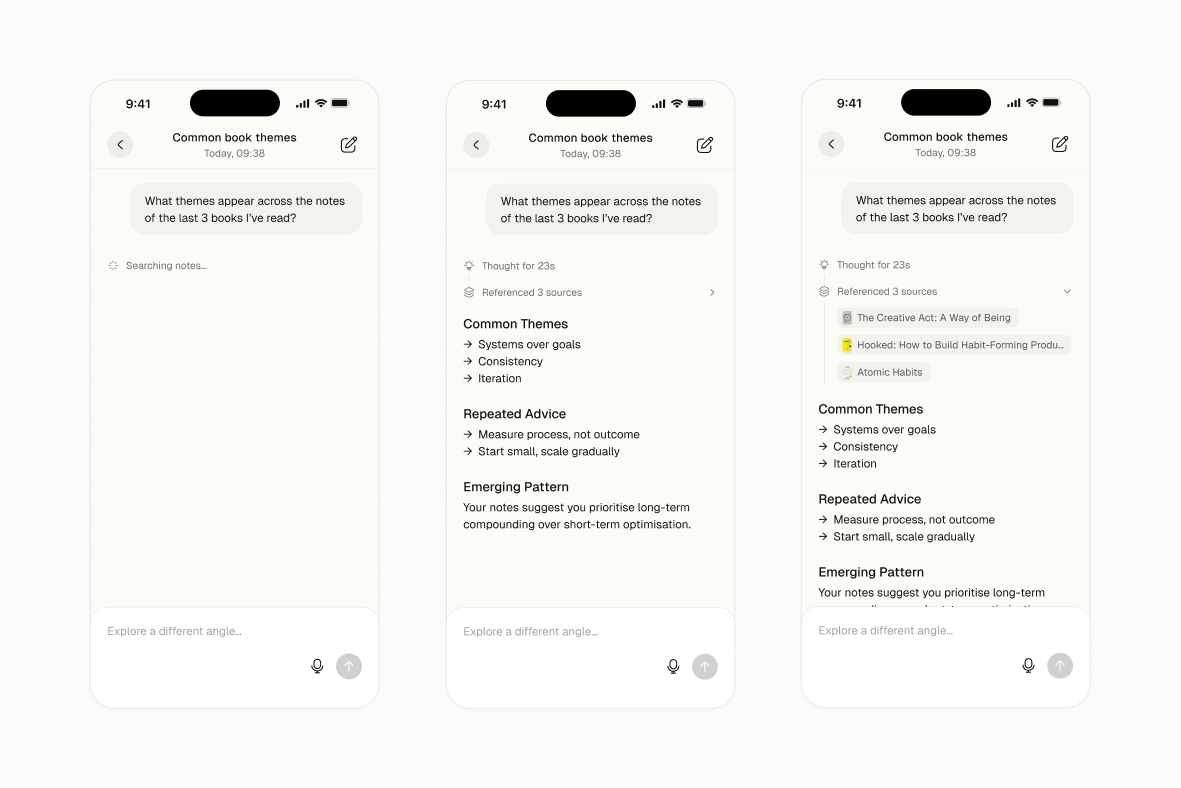
Most note-taking tools stop at storage. The opportunity here was in connecting ideas both across time and across the breadth of your reading, and this led to the introduction of Insights. Users can query their notes across multiple books and our system surfaces patterns, repeated advice, and emerging themes.
Rather than positioning this as a chat interface, it’s designed as a reflection tool, helping users make sense of what they’ve already captured. This enables users to identify new learnings by connecting dots across notes and even different books they’re reading.
Foundations
System design
As this project initially started off as a personal tool, I wanted to keep it very lightweight and utilise existing off-the-shelf solutions, services, and APIs wherever it made sense to do. This enabled me to get a working version ready incredibly quickly and begin testing.
01
Data model
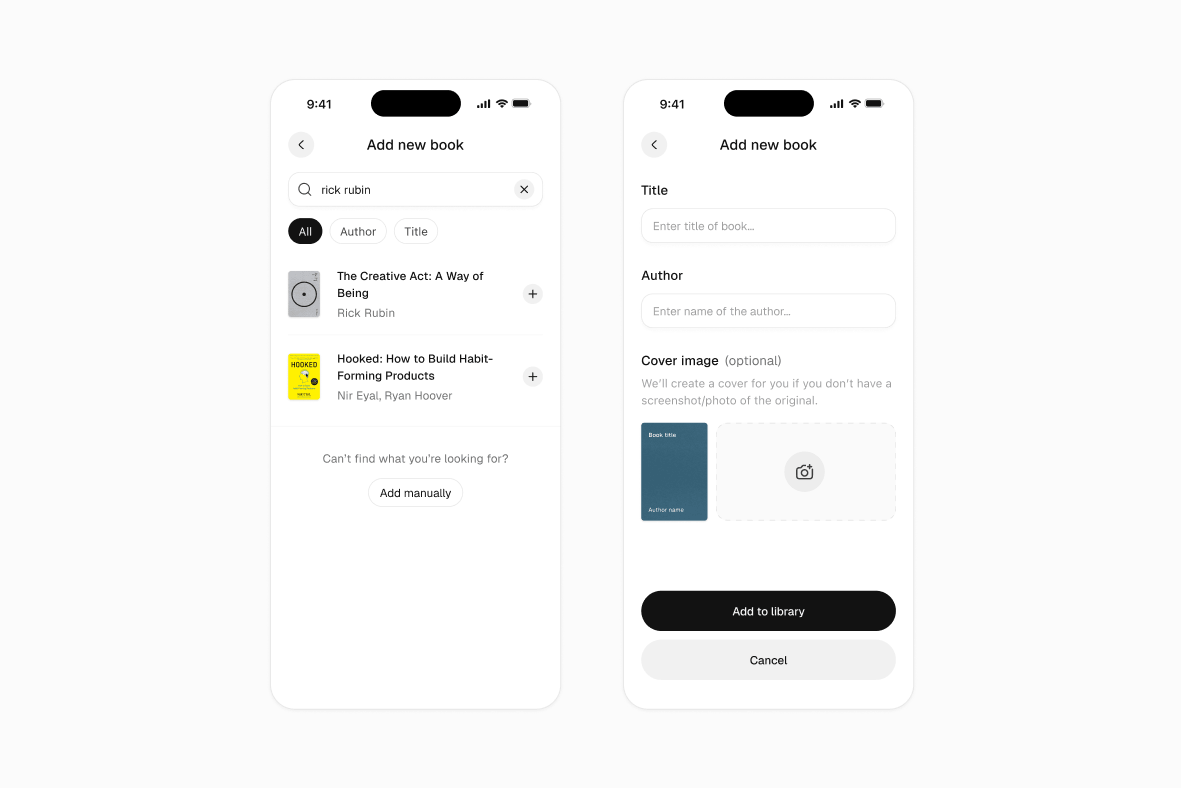
A core part of the product was defining a data model that could support both simplicity in the UI and meaningful structure over time.
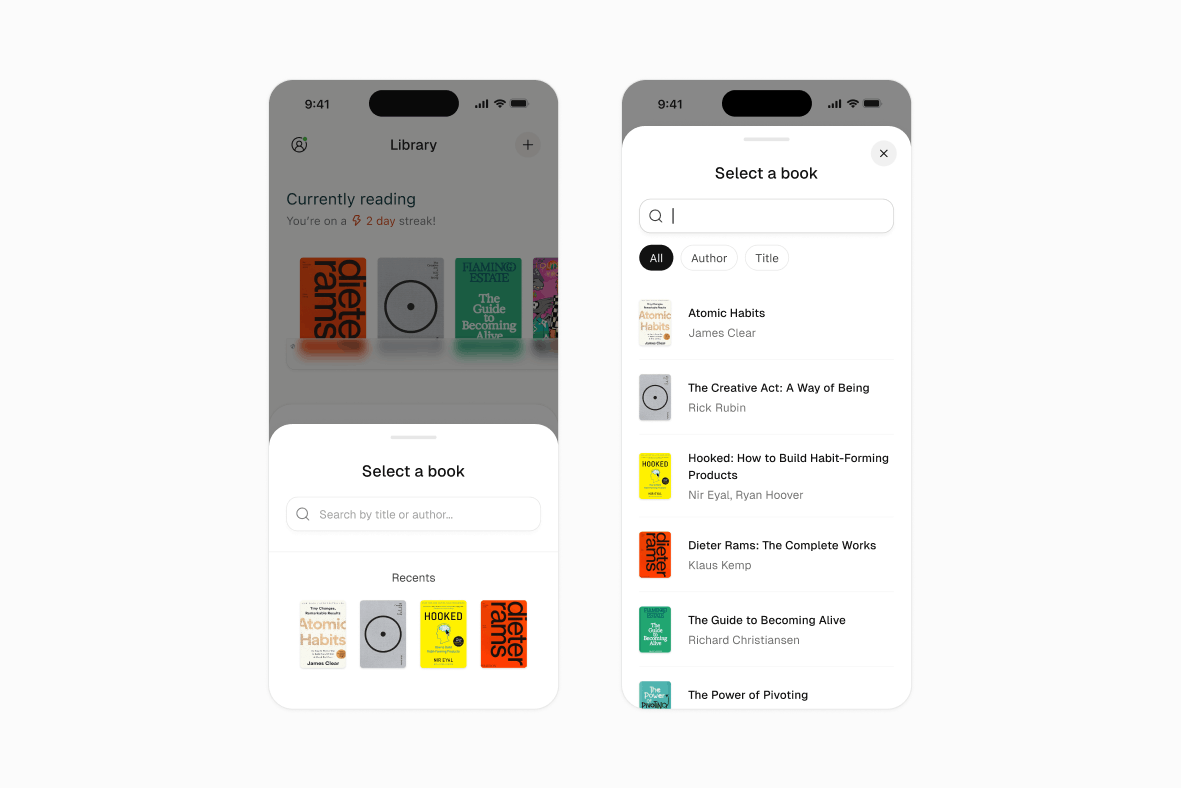
At its foundation, the system is built around books as the primary container, with notes captured as individual inputs tied to them. These notes are then aggregated into summaries at the book level, and further synthesised into insights across multiple books. This structure ensures that everything captured can be meaningfully grouped, queried, and built upon over time.
Requiring users to select a book before capturing a note introduced a small amount of friction upfront, but it was a deliberate trade-off to maintain long-term structure and enable higher-quality outputs later in the experience.
02
Backend & infrastructure
The product is powered by Supabase, which allowed me to design and implement a lightweight but scalable backend architecture.
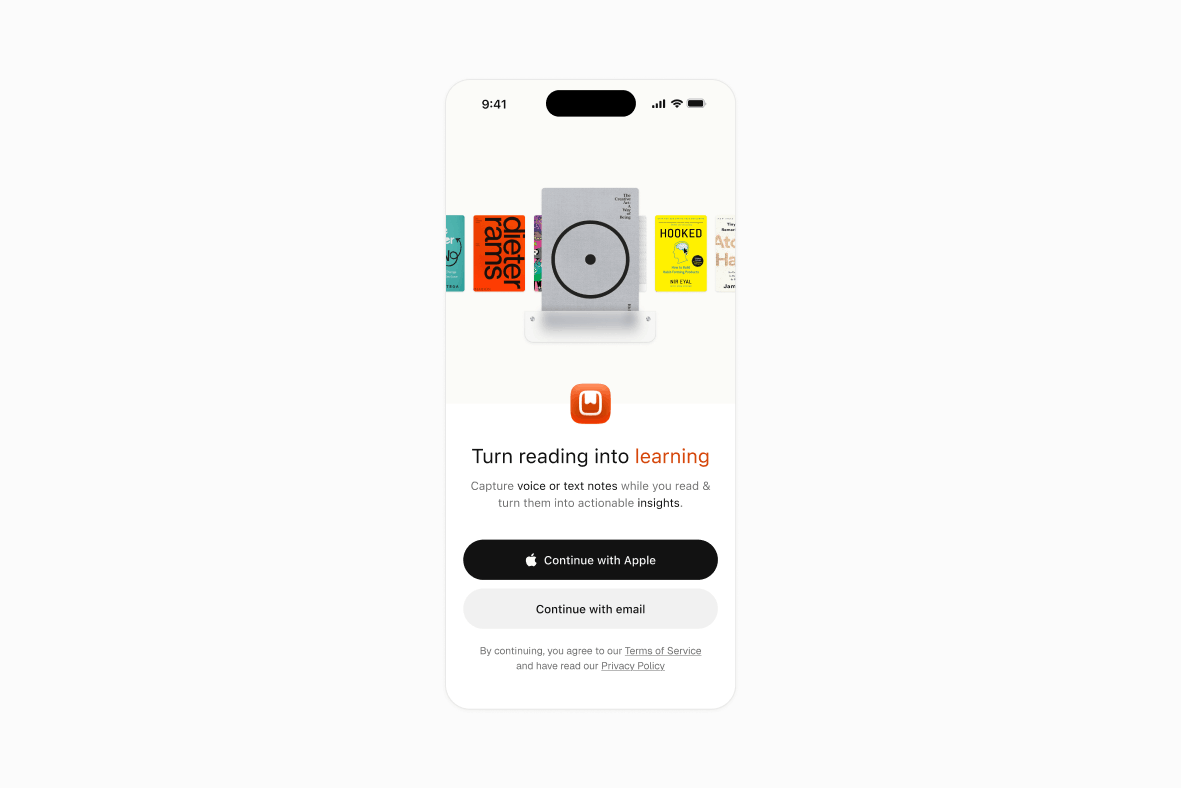
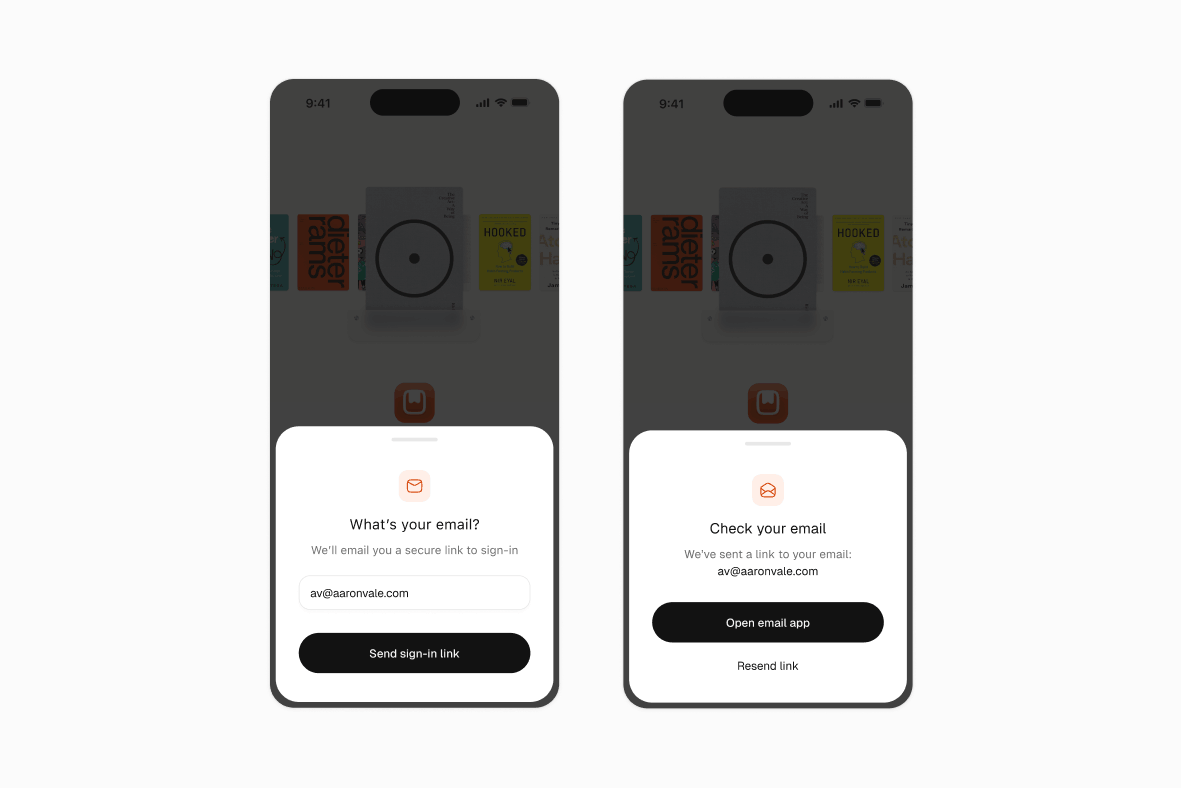
Authentication is handled via Apple Sign-In and email magic links (via Resend), removing the need for passwords and reducing friction during onboarding. Once authenticated, users are immediately dropped into the product, with no additional setup required. Behind the scenes, a relational database structure supports books (powered by Google’s Books API), notes, and insights, while audio recordings are stored separately and processed asynchronously. Row-level security policies ensure that all user data remains private and securely scoped.
This setup allowed me to balance speed of development with a robust foundation, while keeping the user experience focused on immediacy and ease of use.
03
AI pipeline
Each note triggers a processing flow: audio → transcription; transcription → summary; summary → tags + themes.
Our insights layer then consists of selecting the relevant notes, compressing their context and ultimately generating structured outputs for the user.
Some of the key constraints that I faced centred around token usage, processing costs and latency, which in turn informed decisions such as capping recording length, regenerating summaries after batches (not every note, or automatically) and minimising prompt size (for example in Insights, we only include note summaries in the prompt, rather than the raw note transcript itself).
Sustainable model
Monetisation as a product decision
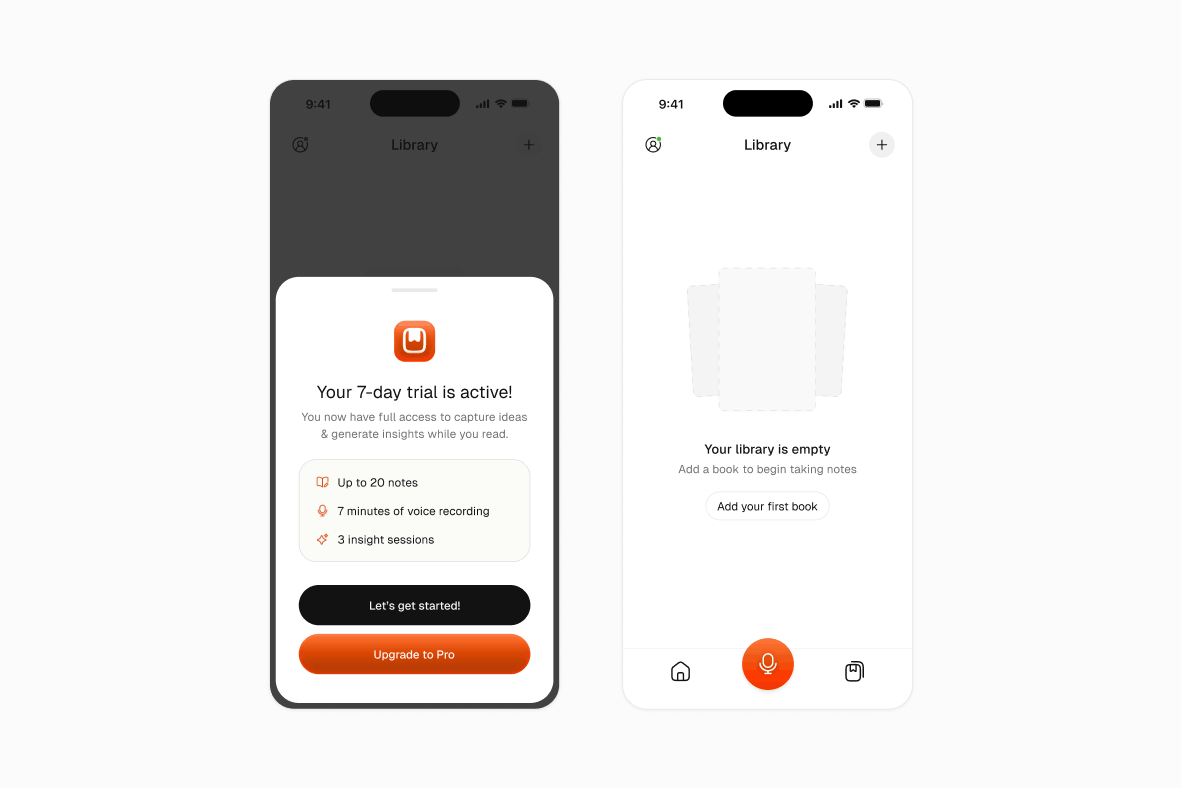
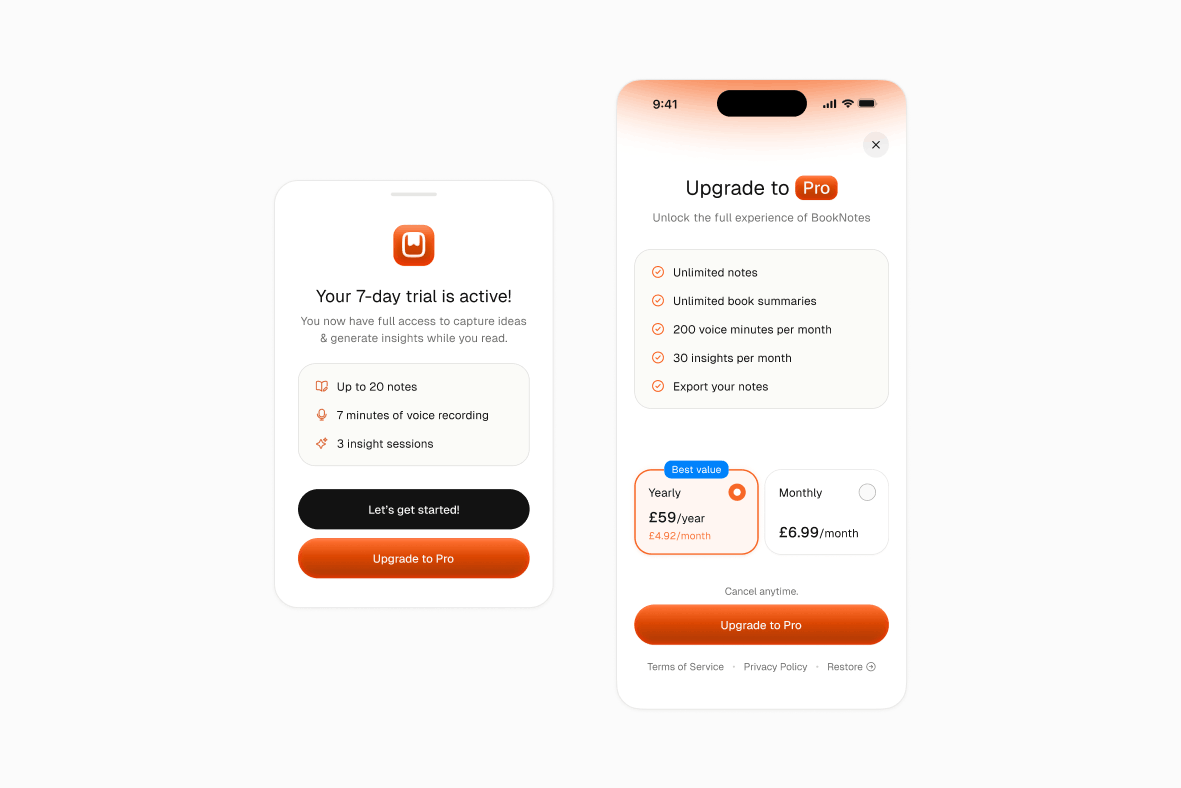
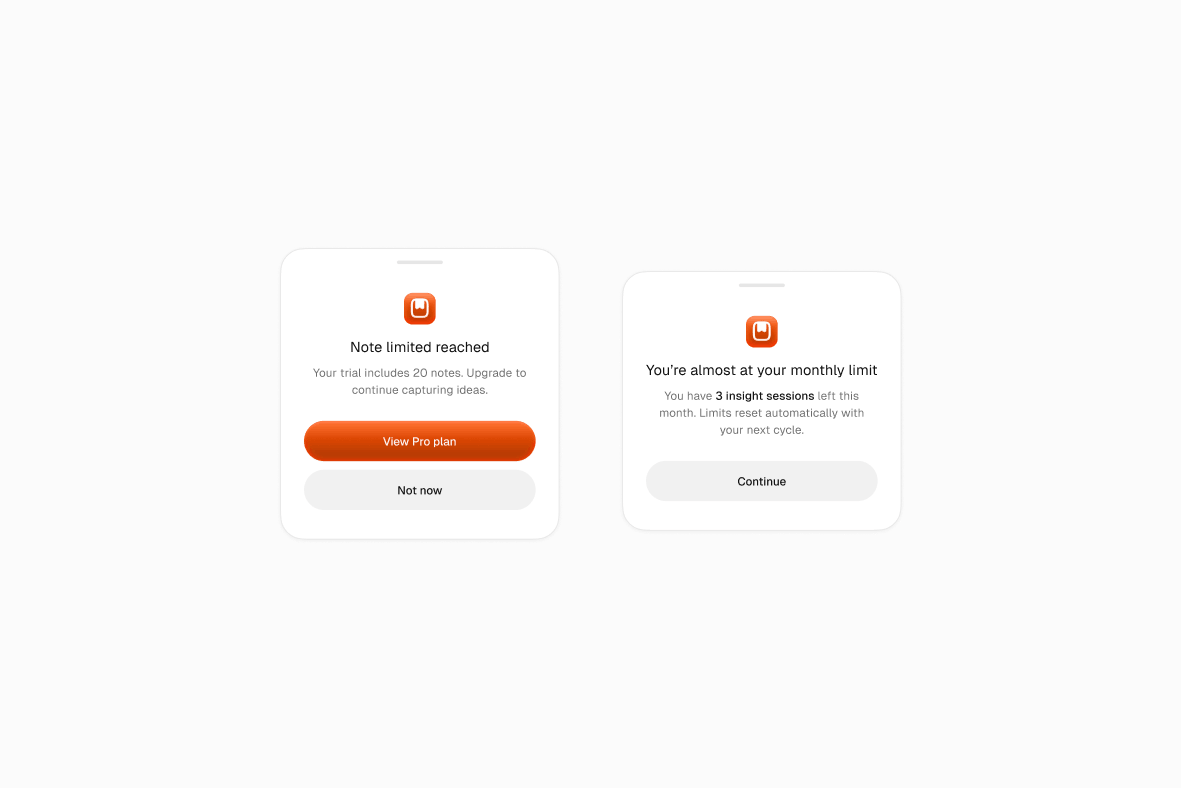
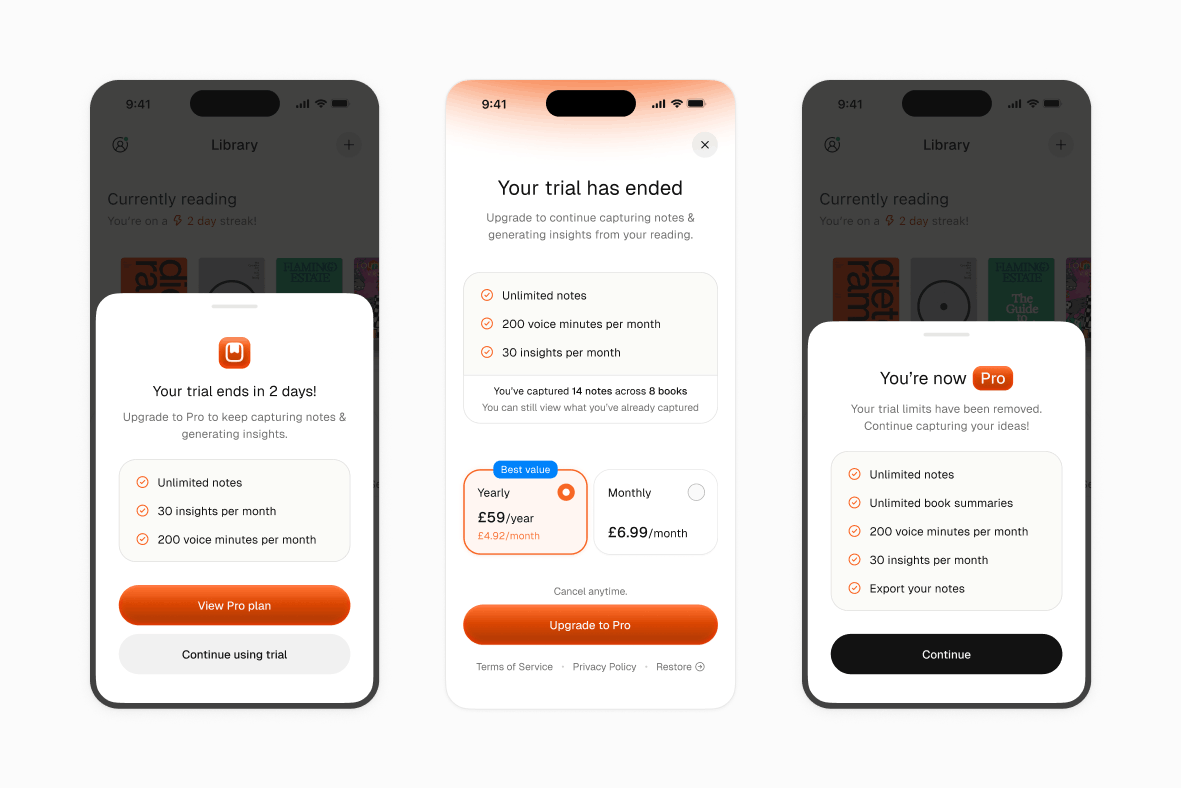
The business model is tightly coupled to how the product works. We initially offer a 7-day free trial, where the user can experience the full breadth of the app’s features within our usage based limits on notes, voice recording minutes and insight sessions. If users then enjoy the experience, they can subscribe to our Pro offering on either a monthly or yearly basis.
Rather than gating features in our initial trial, limits are tied to actual system cost drivers – this ensures the product remains sustainable as usage scales.
From idea to App Store
What’s next?
I’ve had tons of fun building this app from scratch and am now using it for personal use daily. It’s also now available on the App Store here for everyone to use and enjoy!