
TradeBlock
Creating a market-leading crypto trading platform for institutional investors.
Background
Modernising a trusted product
While working at a design agency in 2023 whose expertise was in the financial sector, I was drafted on to a project for TradeBlock as a senior product designer; they were an institutional crypto trading platform that had been operating for just under a decade. Over the years, TradeBlock had grown to support a wide range of trading activity (including spot, OTC, options, portfolio management, and automated quoting) and was used daily by professional traders managing significant capital.
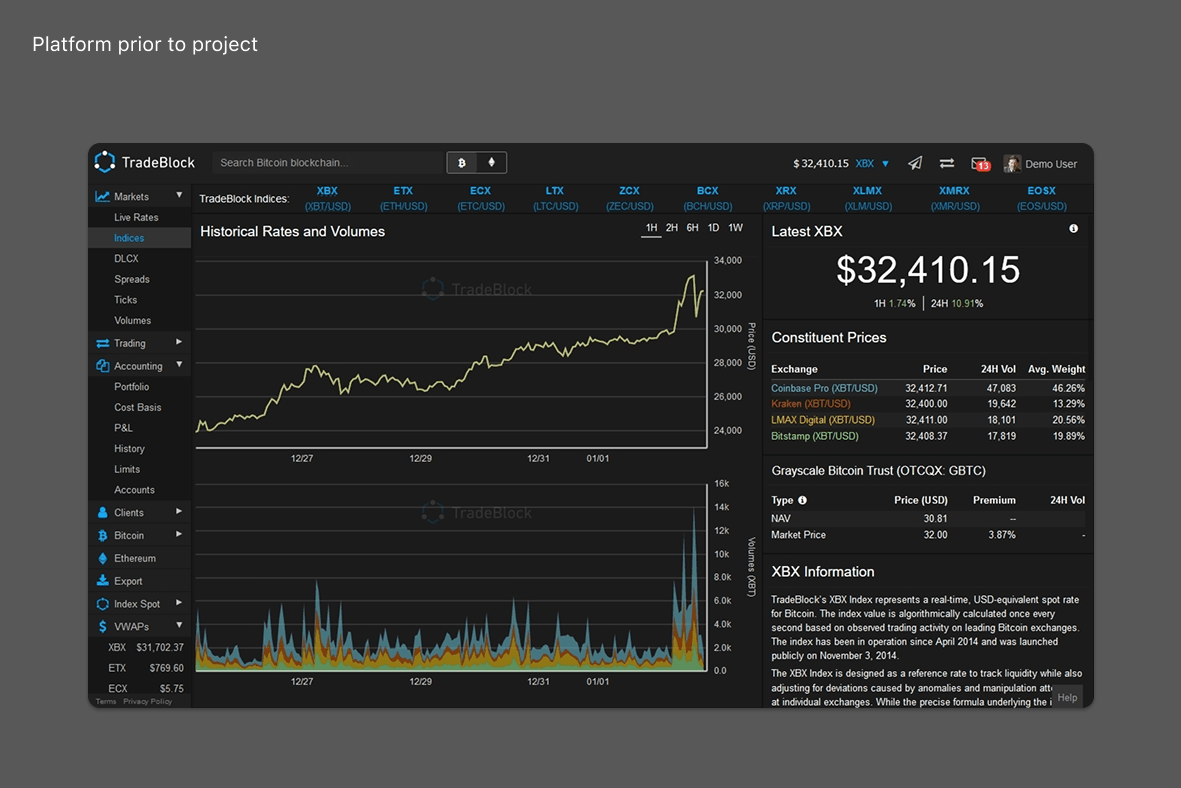
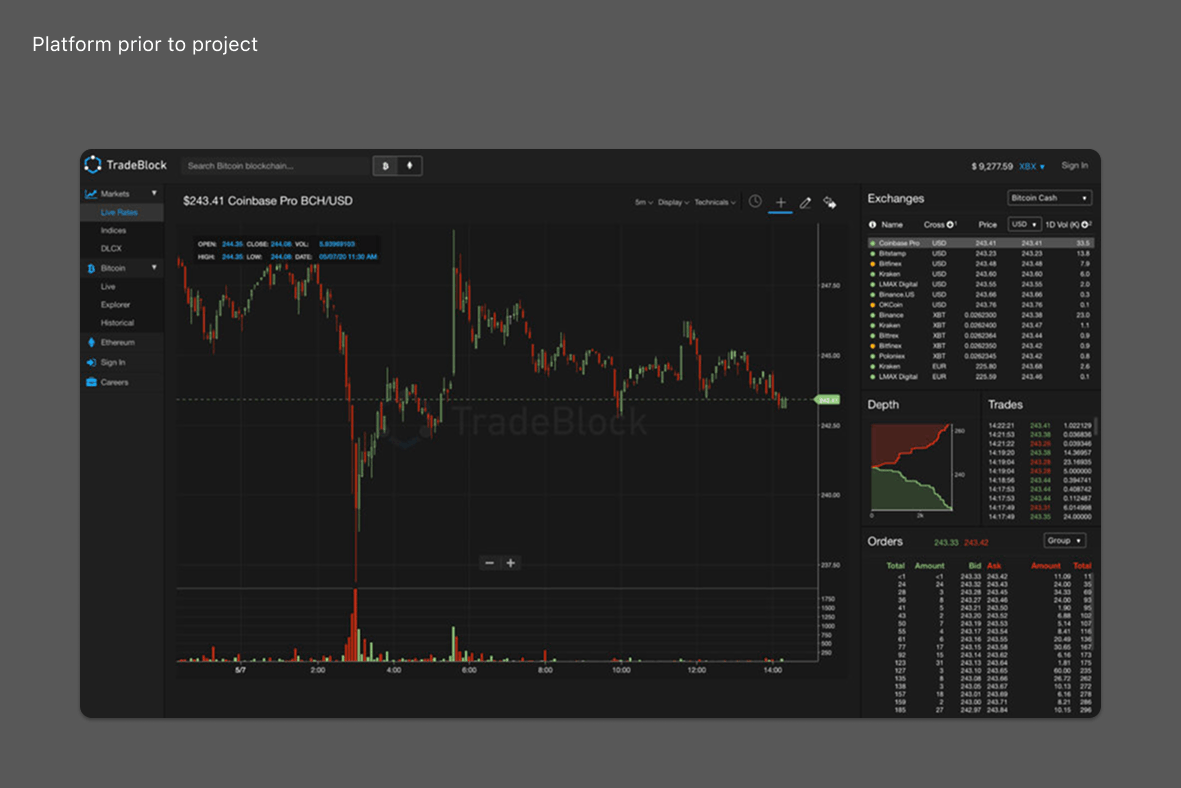
While the platform was powerful and well-trusted, much of the UI reflected years of incremental evolution. Visual hierarchy, consistency, and clarity had started to suffer, making it harder for users to quickly assess state, risk, and intent across different parts of the product.
The brief was to redesign TradeBlock’s platform to improve usability and confidence, while being extremely careful not to disrupt existing workflows or alienate long-standing institutional users.
Context & constraints
Designing within legacy, regulation, and risk
This was not a greenfield product. TradeBlock already had an established institutional user base with deeply ingrained behaviours, muscle memory, and expectations shaped by both crypto-native tools and traditional finance platforms. Any meaningful changes needed to be evolutionary rather than revolutionary.
Early on, we worked closely with TradeBlock stakeholders, product owners, and internal trading teams to understand where the platform was succeeding and where it was beginning to show strain. A recurring theme was that while the platform was extremely capable, users often had to work harder than necessary to interpret state, risk, and intent – particularly when switching between trading, portfolio, and risk views.
Some of the key constraints we were working within on TradeBlock included: high data density was expected and required; the cost of user error was extremely high; traders valued speed and predictability over discoverability; multiple asset types, venues, and custodians had to coexist; and, performance and latency considerations limited certain interaction patterns.
Rather than trying to simplify TradeBlock, the goal was to make complexity easier to read and reason about, while preserving the workflows users already trusted.
Core trading experience
Reducing cognitive effort under pressure
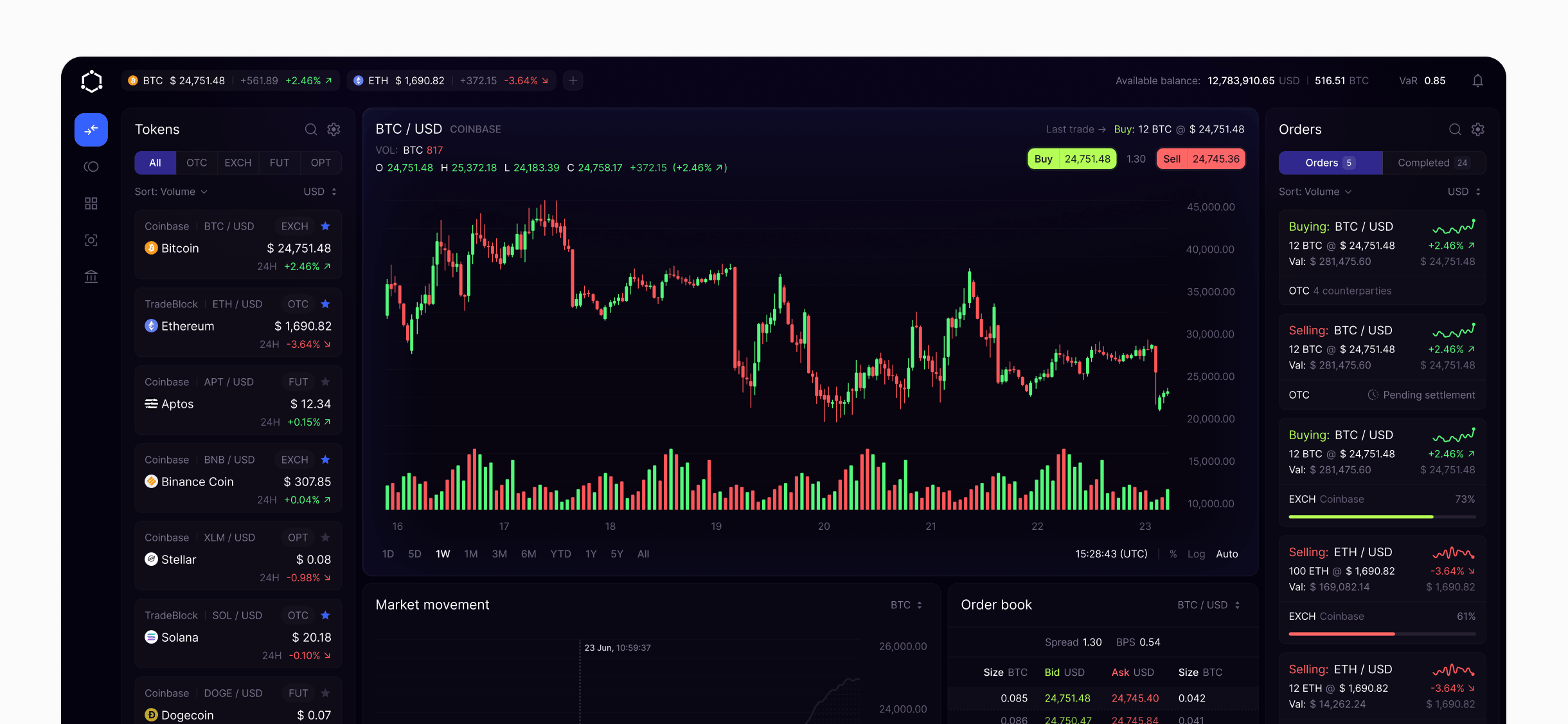
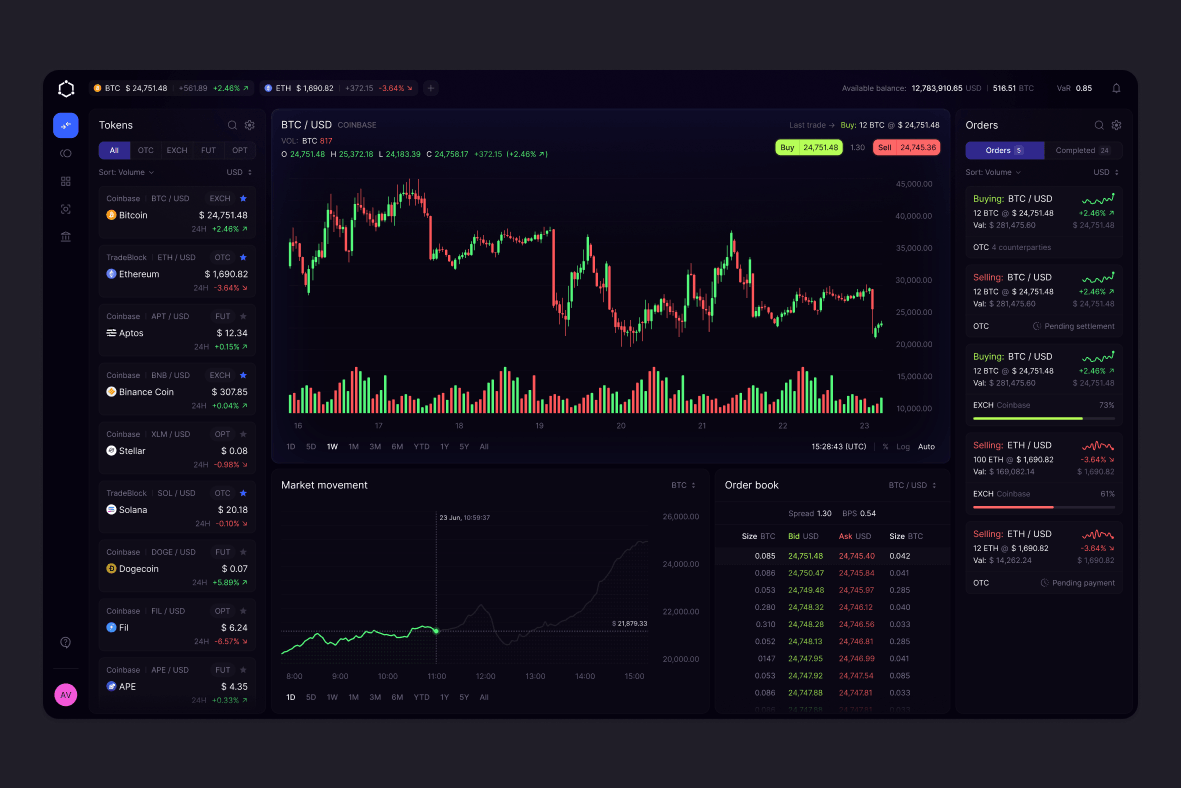
The TradeBlock trading dashboard is the primary workspace for most users and combines several complex surfaces into a single view: charts, order books, execution controls, and live order state.
Through stakeholder discussions and internal reviews of existing usage patterns, it became clear that traders weren’t struggling with access to information, they were struggling with prioritisation. Important signals were often visually competing with one another, particularly during volatile market conditions.
In response, we restructured the main Dashboard screen around three clear zones: 1. Live token list (split by OTC, Exchange, Futures & Options); 2. Market context (charts, market movement, order book); 3. Order state (open, completed, and pending orders)
This approach preserved information density while giving traders clearer visual anchors, reducing the cognitive effort required to scan and interpret the screen under pressure.
Order management & risk awareness
Designing for safety, not just speed
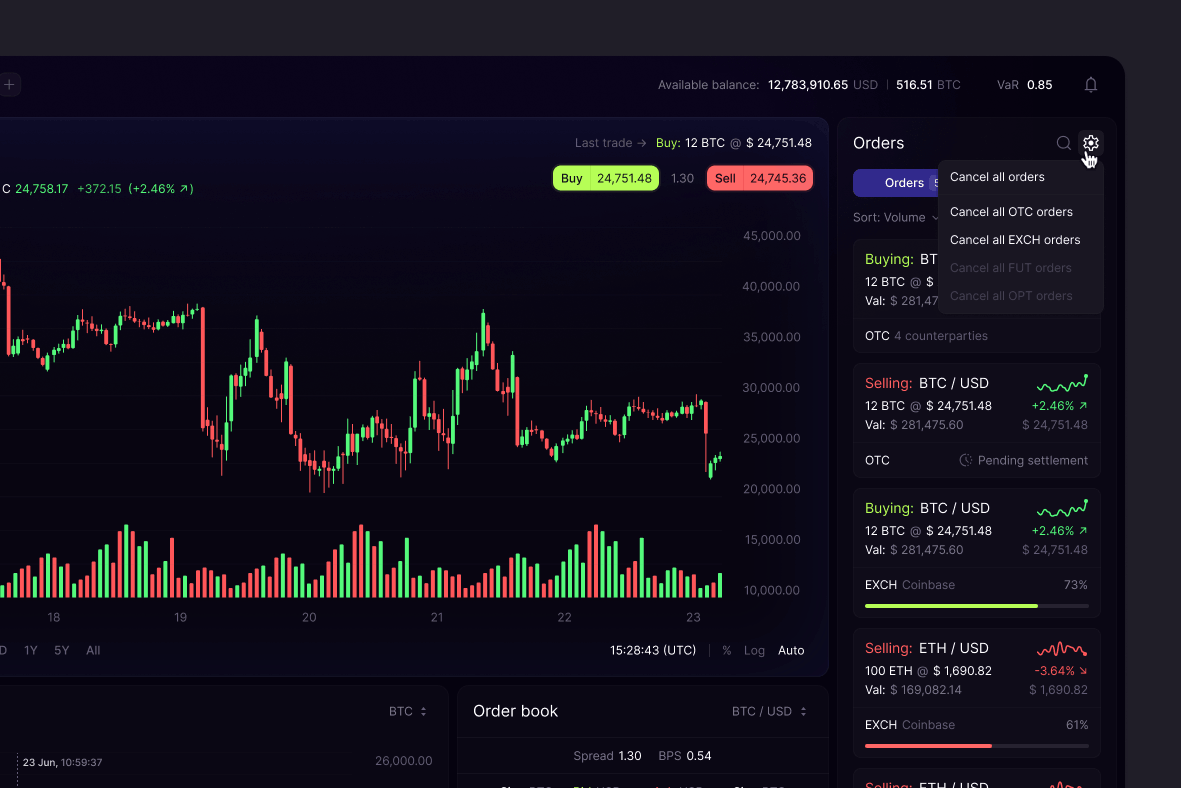
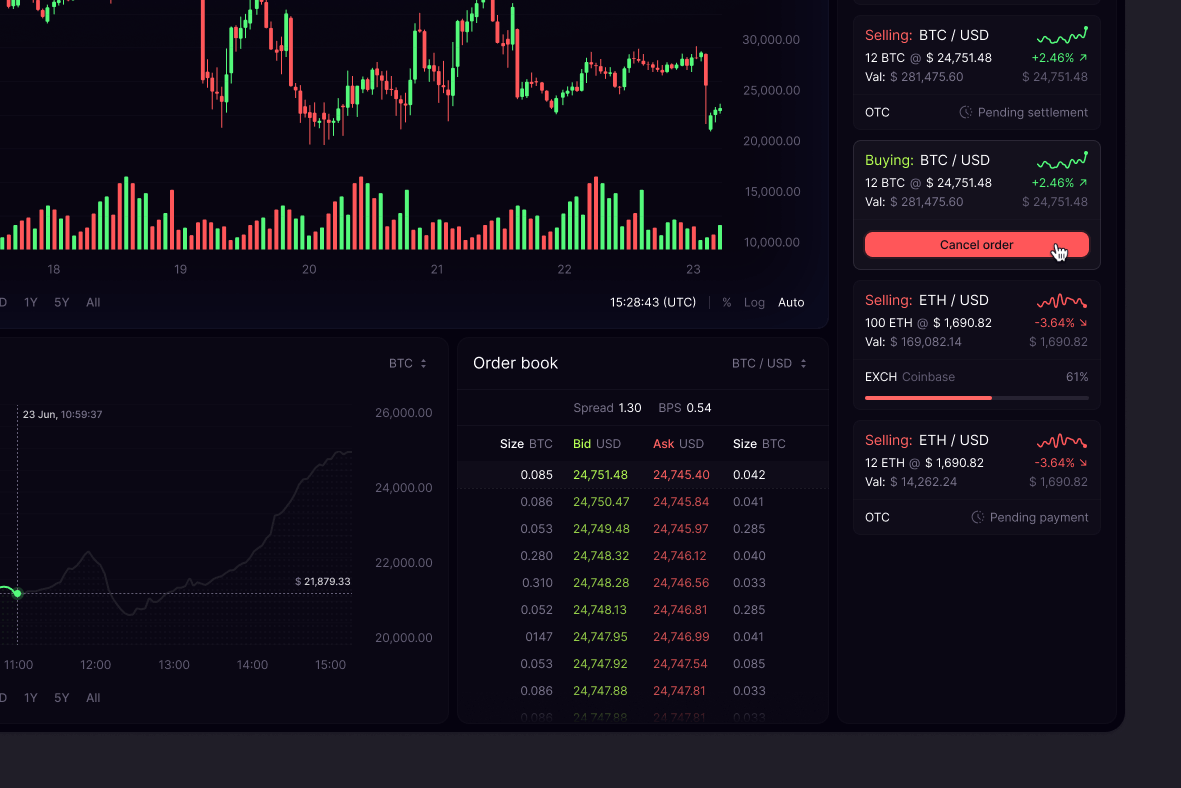
Order management on TradeBlock was treated as a first-class experience rather than a secondary concern. Open orders, partial fills, and pending settlements are always visible, reinforcing a constant sense of system state.
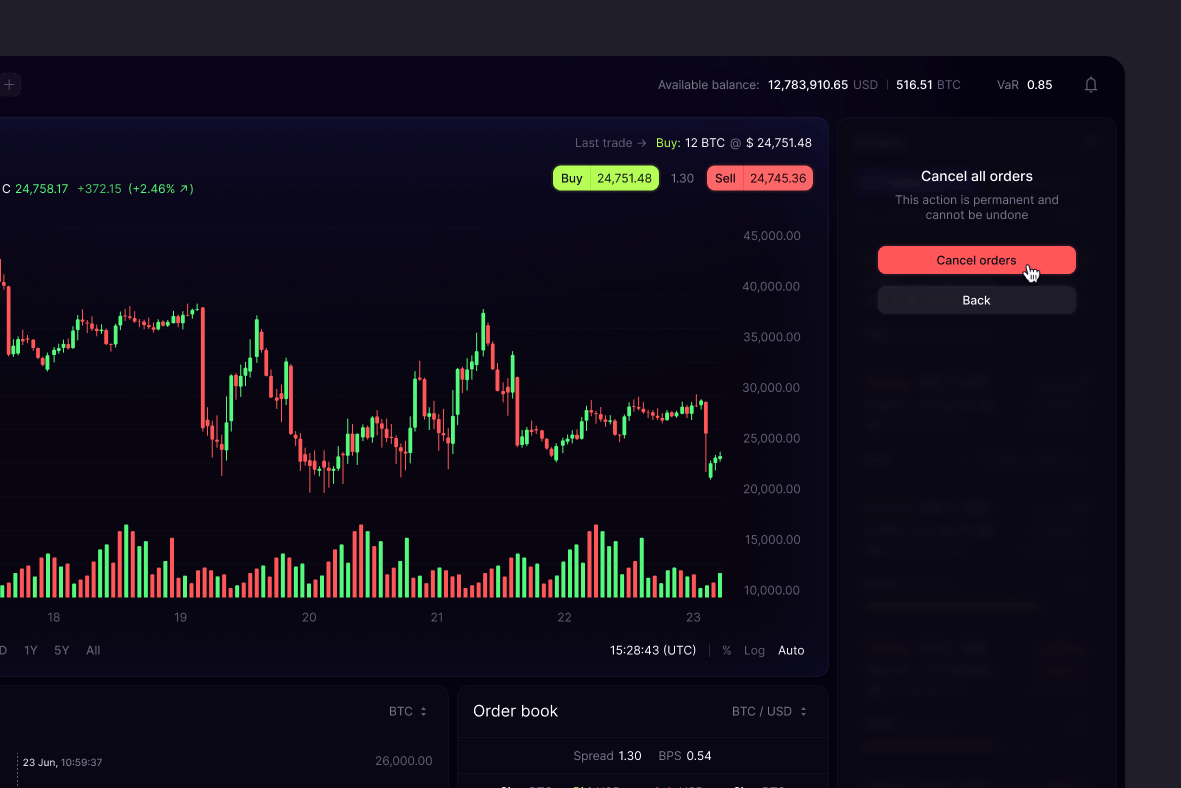
In conversations with TradeBlock stakeholders and operations teams, one concern came up repeatedly: accidental or poorly-timed actions during fast-moving markets. While traders valued speed, they were equally conscious of the cost of mistakes.
This informed a deliberate trade-off in the design. Bulk cancellation options and destructive actions are grouped behind explicit menus, requiring a conscious decision rather than a single accidental click. This added a small amount of friction, but significantly increased confidence during execution.
Across TradeBlock, this principle held true: optimising for safety and clarity over raw speed.
Order entry & execution
Clarity at the point of commitment
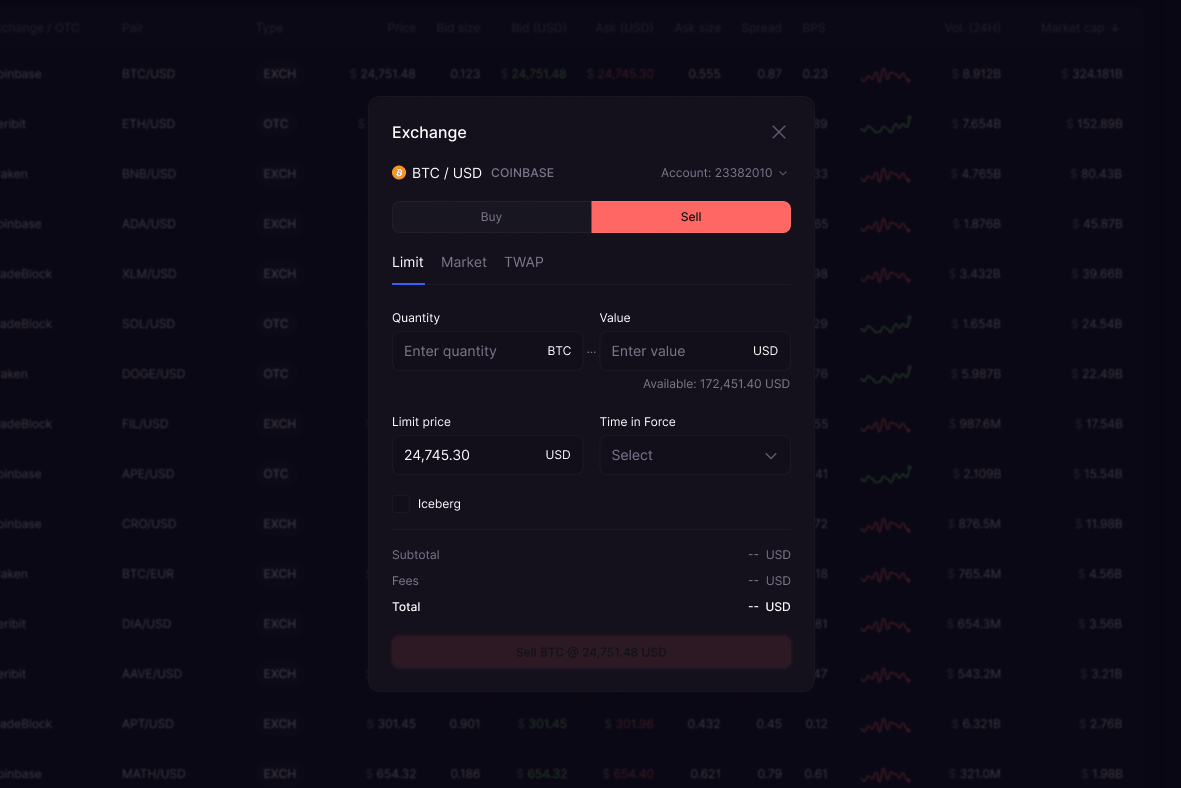
TradeBlock’s exchange order ticket needed to support both routine trades and more advanced execution strategies.
Feedback from internal users highlighted that while advanced options were valuable, presenting everything up front increased visual noise and slowed down common actions. As a result, the order ticket was designed around a progressive disclosure model. This allowed experienced traders to move quickly, while still supporting more nuanced trading behaviour when required.
OTC RFQ Flow
Making time, price, and counterparty explicit
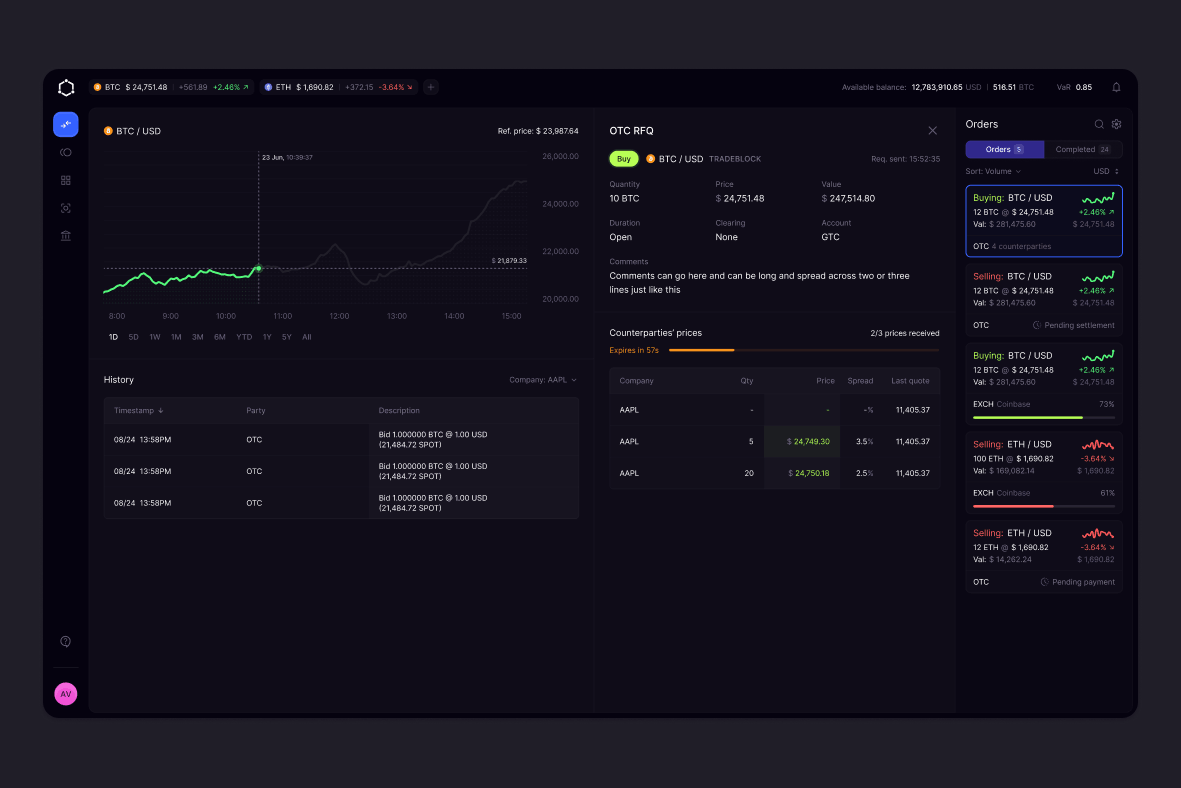
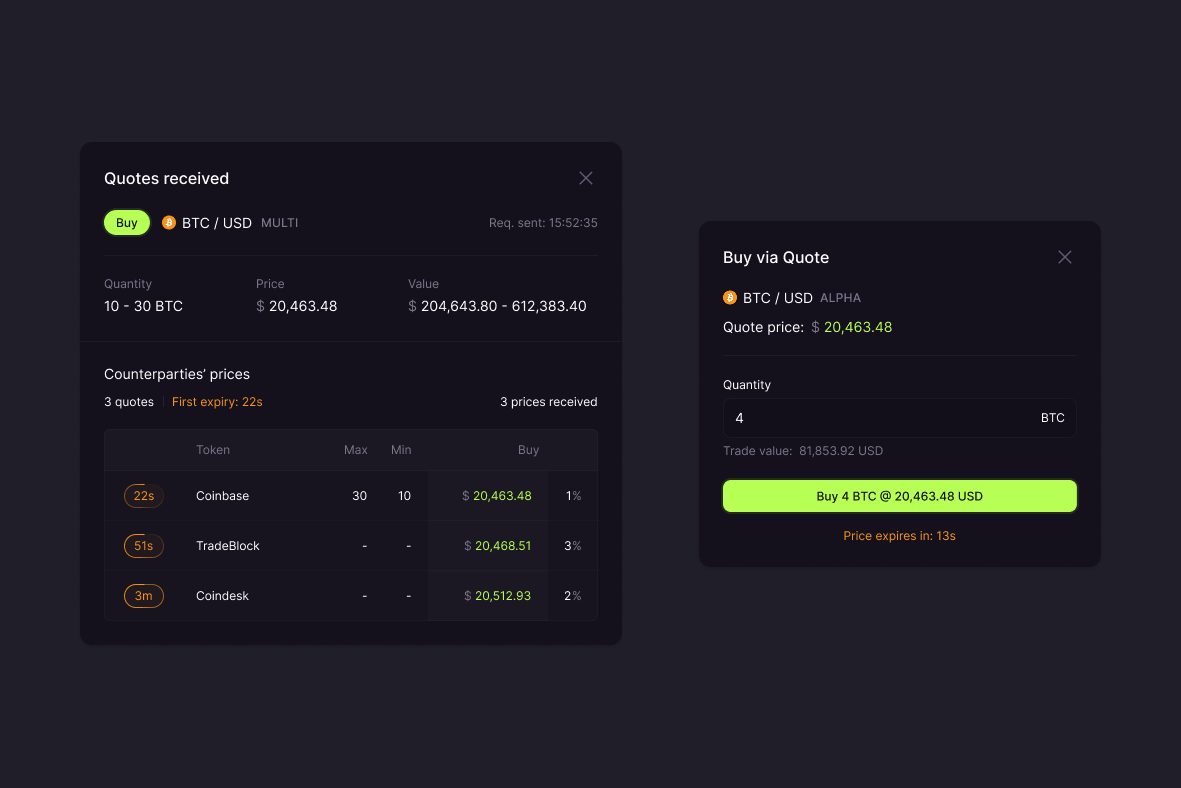
OTC trading on TradeBlock introduces a different set of challenges around counterparties, pricing windows, and expiry risk.
Discussions with TradeBlock stakeholders made it clear that opacity in OTC workflows was a major source of frustration. Traders wanted more transparency around who they were trading with, how long prices were valid for, and what would happen if a quote expired.
Rather than abstracting this away, the RFQ experience surfaces these constraints directly. Quotes are time-boxed and visually emphasised, with countdowns and expiry indicators designed to reduce the risk of acting on stale information. Multiple counterparty prices can be compared side-by-side, supporting informed decision-making under time pressure.
Options trading & strategy building
Supporting expert workflows without oversimplifying
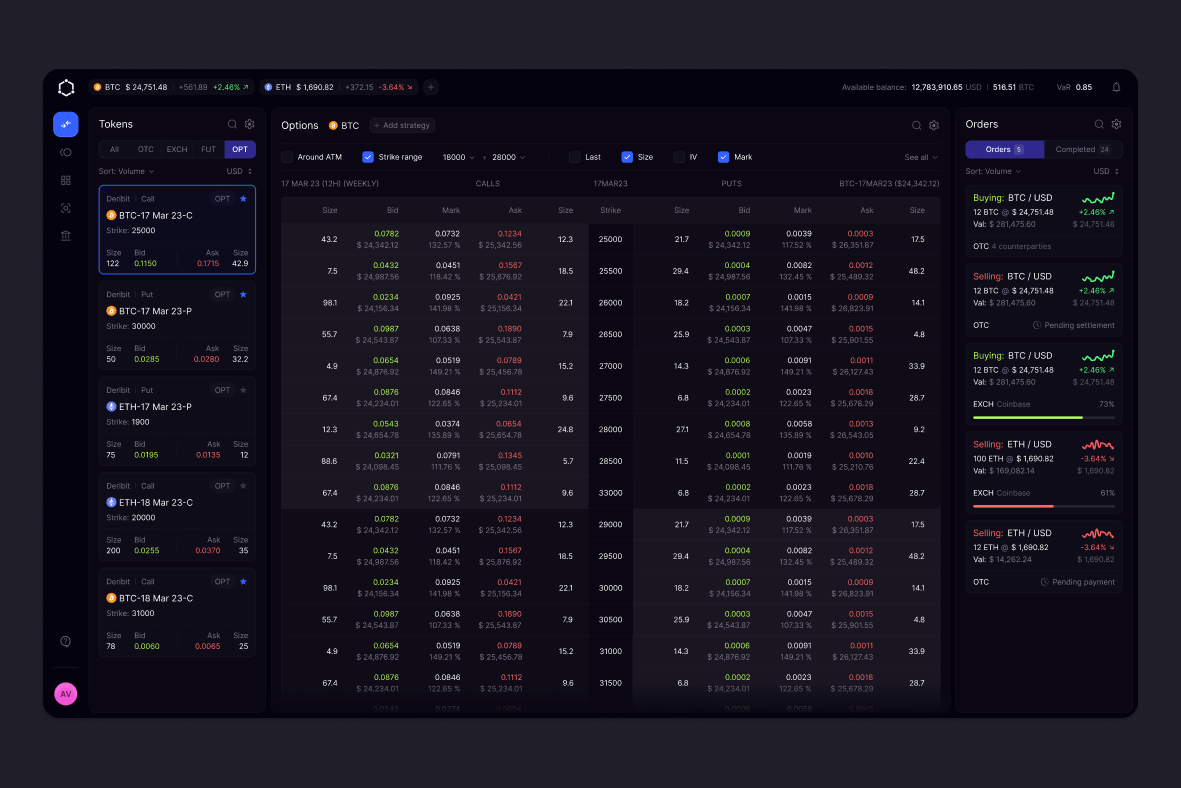
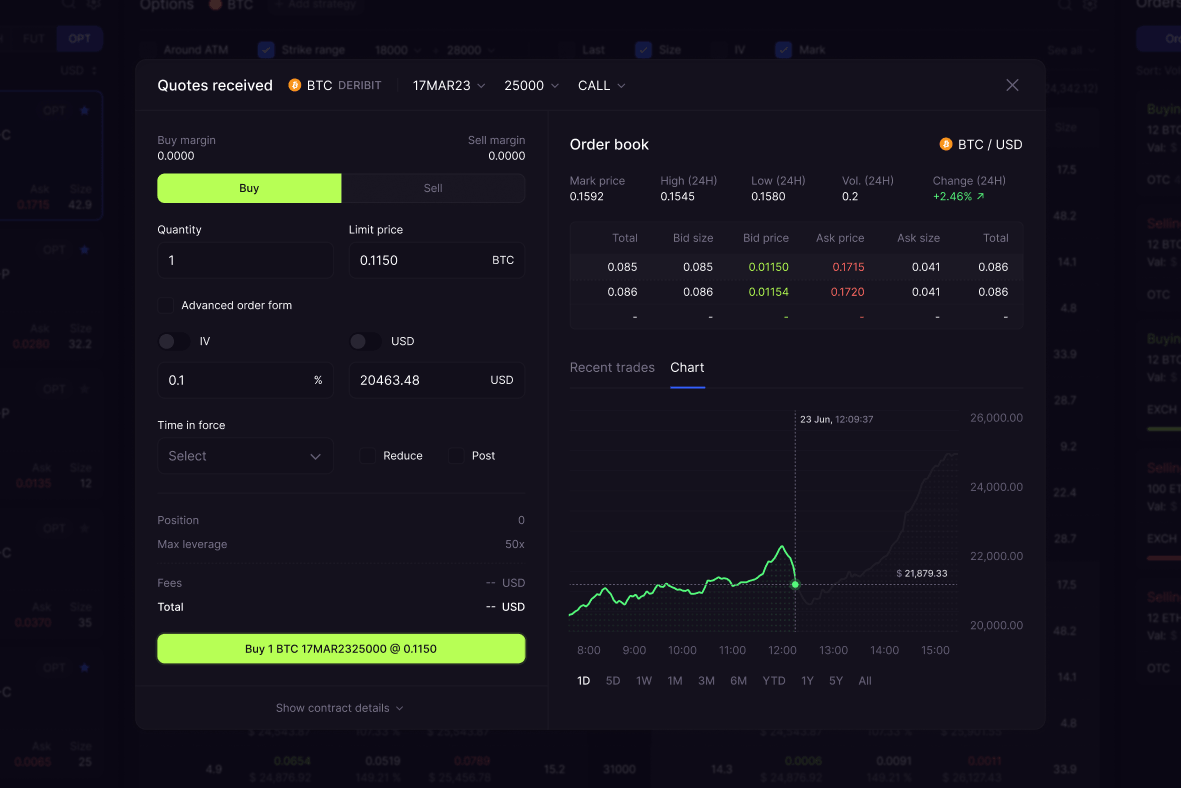
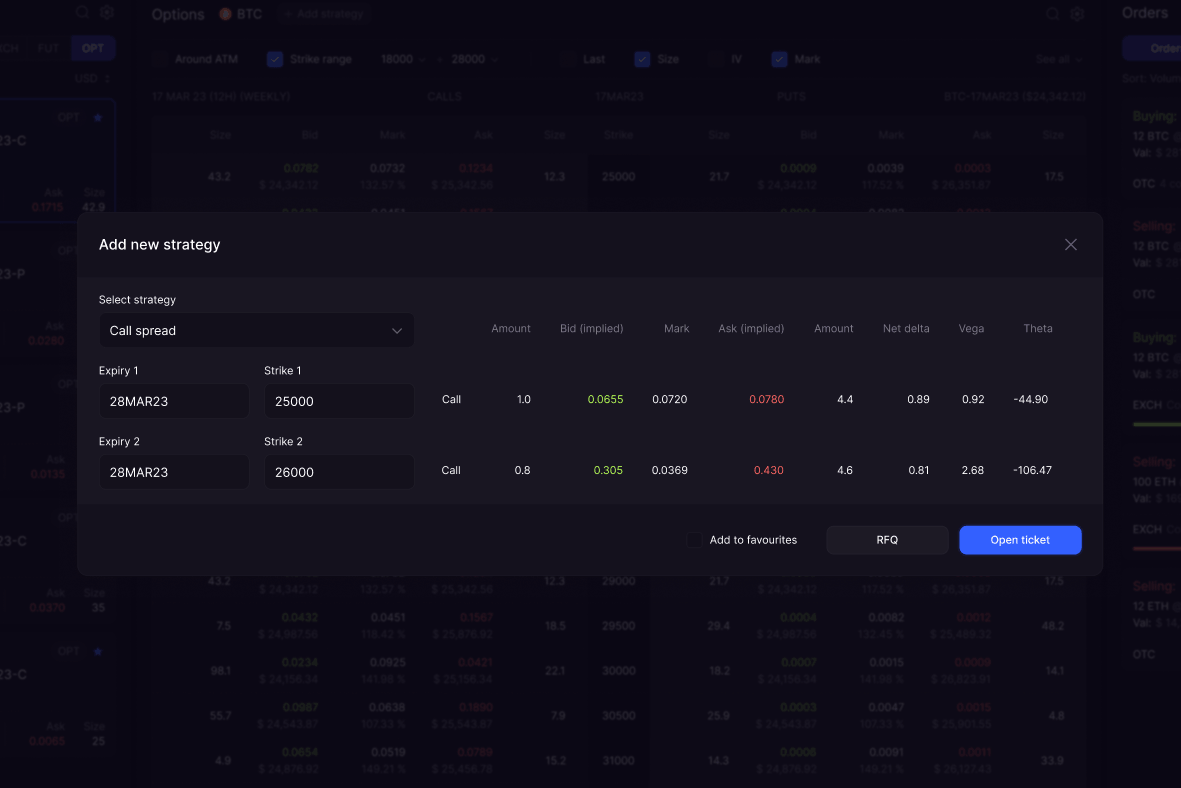
Options trading on TradeBlock is inherently complex, and we made a conscious decision not to oversimplify it.
Feedback from experienced users highlighted that dense tabular layouts were not only acceptable, but preferred (provided they were consistent and readable). As a result, the options chain leans into familiar patterns that support rapid scanning across strikes, expiries, and pricing.
Strategy creation and execution are handled via focused modals, allowing traders to concentrate on a specific task without losing broader market context. Inline metrics reduce the need for external tools or mental calculations, supporting faster and more confident decision-making.
Portfolio management
Reflecting real institutional structures
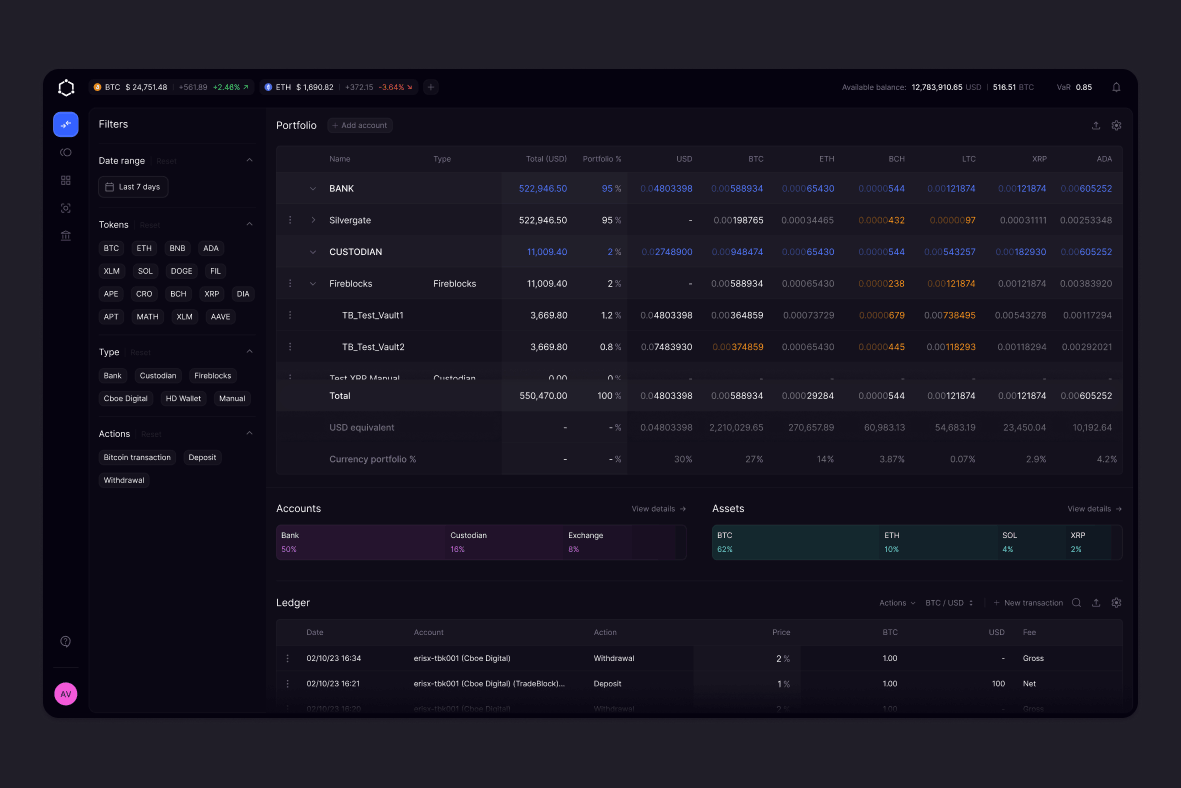
TradeBlock users often manage assets across multiple banks, custodians, exchanges, and wallets. During early walkthroughs with stakeholders, it became clear that portfolio views needed to serve both day-to-day monitoring and higher-level oversight.
01
Portfolio overview
Accounts are organised hierarchically, allowing users to collapse and expand detail as needed. Totals and allocations are visible at both account and portfolio level, while consistent table patterns reinforce familiarity across the platform.
02
Optimising for auditability over speed
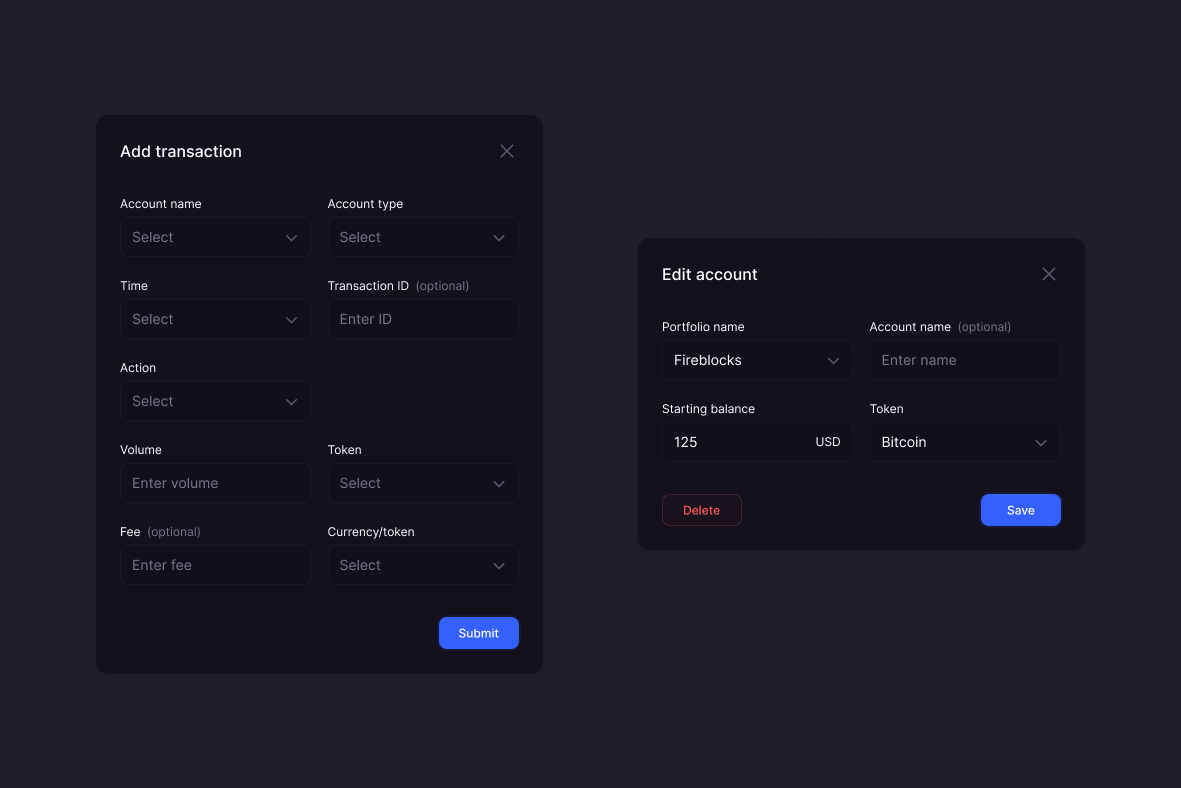
Supporting workflows such as adding accounts, editing balances, and recording manual transactions on TradeBlock were designed to prioritise clarity and auditability.
From stakeholder feedback, it was clear these actions were often performed infrequently, but carried high importance. Rather than optimising for speed, these flows were designed to slow users down slightly and make consequences explicit, reducing the risk of reconciliation issues later.
03
Reducing friction between insight and execution
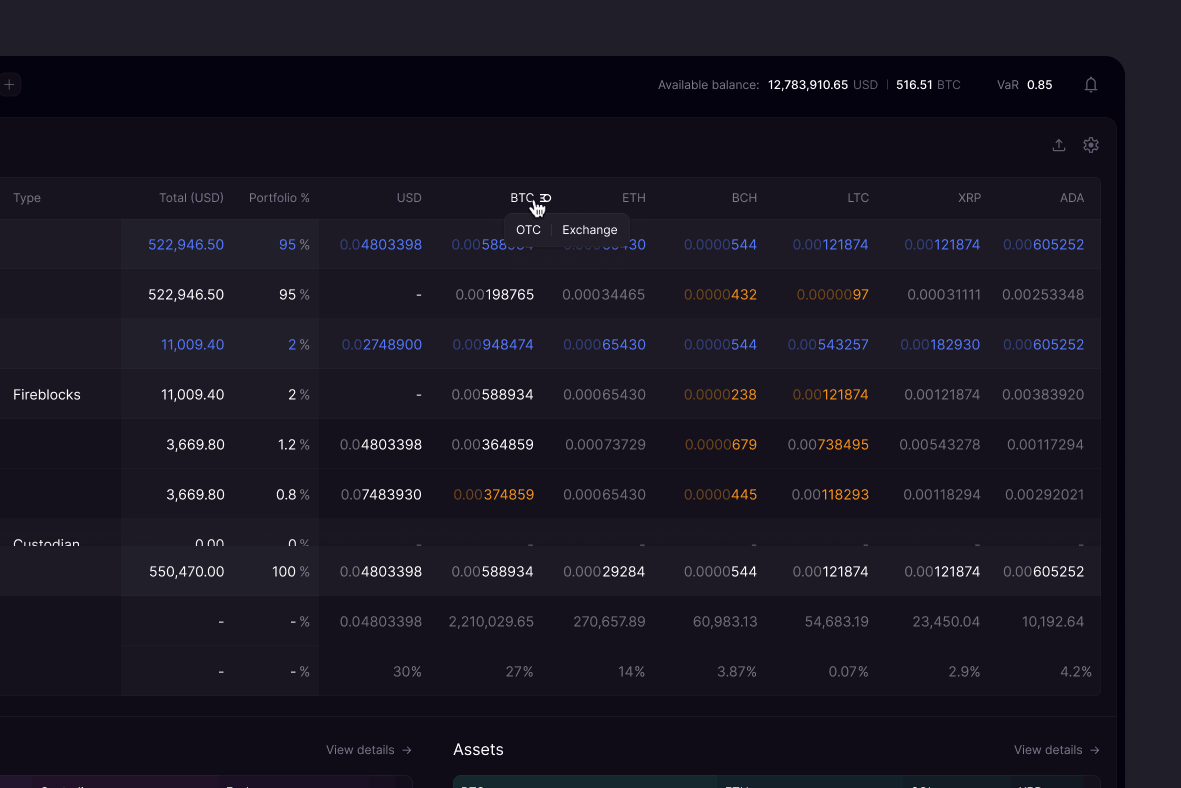
While reviewing portfolios, TradeBlock users often need to act on positions quickly without losing context. Stakeholder feedback highlighted that switching between portfolio views and trading screens introduced unnecessary friction, particularly for time-sensitive decisions.
To address this, we introduced a quick trade interaction directly within the portfolio table. Hovering over a token reveals a lightweight action menu that opens either an OTC or exchange ticket in a single step. This preserves the safeguards of the full trade flow, while significantly reducing navigation overhead between analysis and execution.
Quote templates & automation
Separating configuration from execution
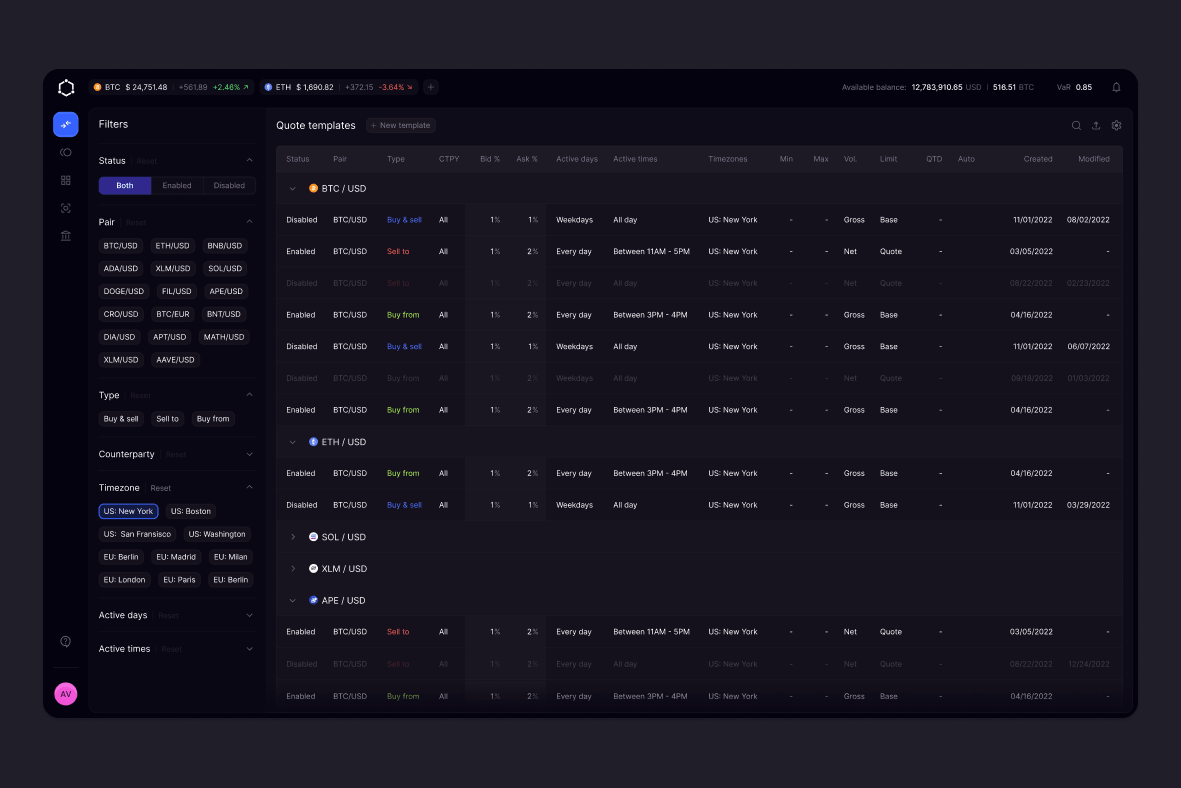
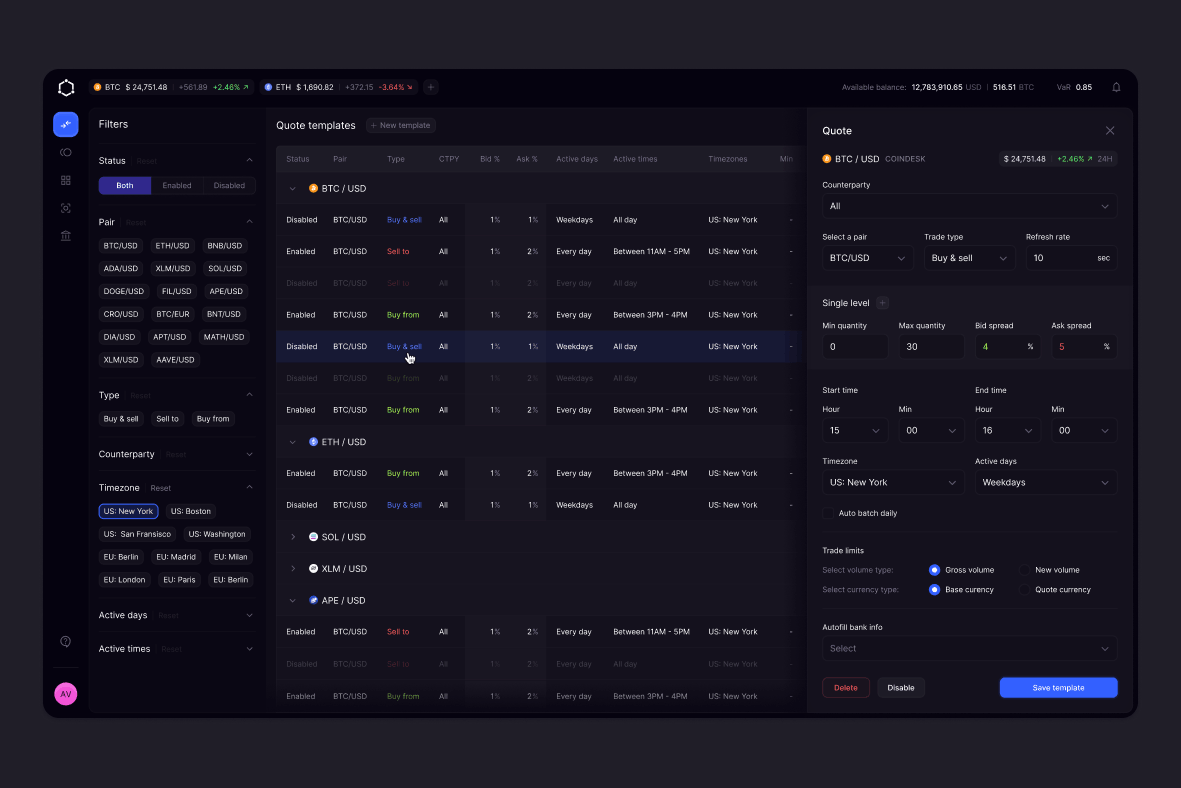
TradeBlock’s quote templates allow users to define rule-based trading behaviour across specific pairs, counterparties, volumes, and time windows.
In discussions with product and trading teams, a key requirement emerged: configuration needed to be powerful, but isolated from live trading. This led to a clear separation between template management and execution, reducing the risk of unintended behaviour.
Timezone awareness and active-hours controls were critical, particularly for global trading operations where misaligned schedules could lead to unexpected exposure.
Risk metrics & oversight
Making exposure visible without leaving the workflow
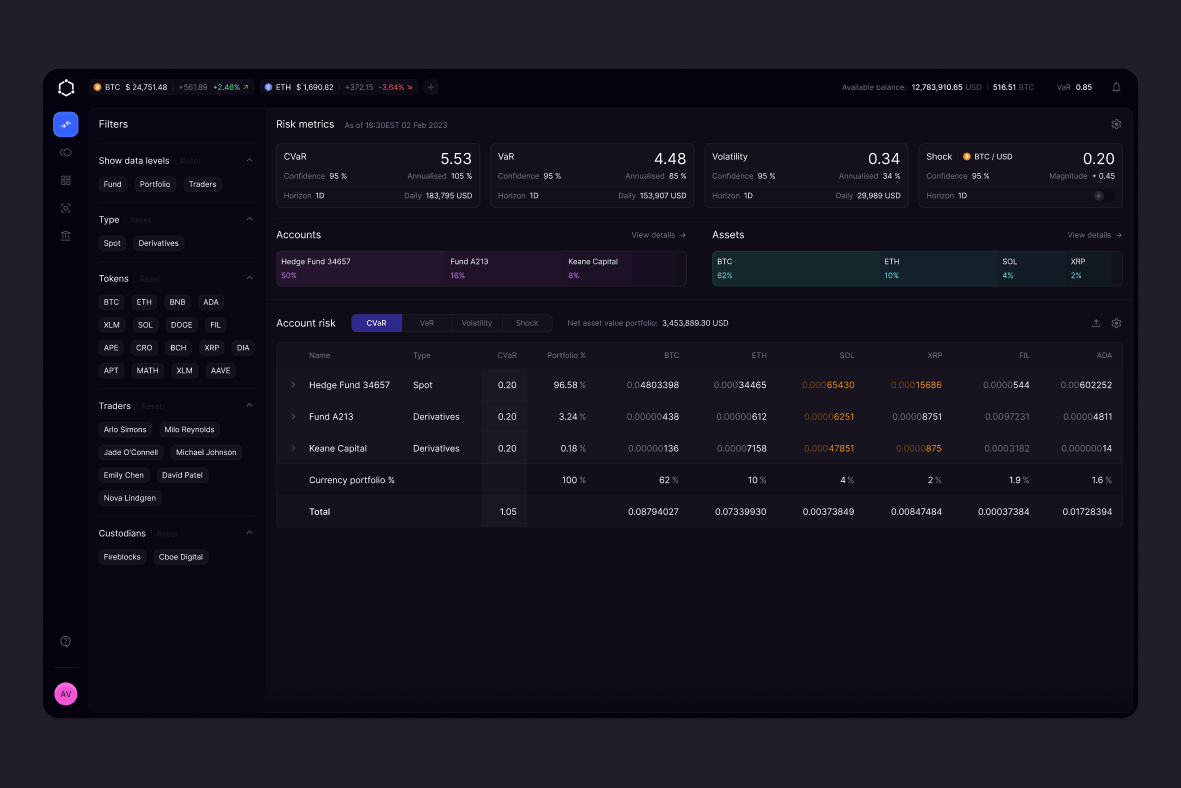
Risk is surfaced as a core part of the TradeBlock platform rather than a secondary reporting tool. Stakeholders highlighted the need for both traders and oversight roles to understand exposure without switching tools. As a result, portfolio-level metrics such as VaR, CVaR, volatility, and shock are presented alongside asset and account breakdowns.
This view supports both tactical decision-making and strategic oversight, reinforcing TradeBlock’s institutional focus.
Reflection
Restraint as a design skill
This project reinforced the importance of restraint when redesigning mature, high-risk products like TradeBlock.
In many cases, the most impactful improvements came from small changes to hierarchy, layout, and state visibility rather than wholesale interaction changes. Designing for expert users often means resisting the urge to start from scratch, and instead focusing on clarity while having respect for existing workflows.
